Post-Purchase Behaviour & Analysis: What To Expect? [2026]
Are you wondering about your customers’ post-purchase behaviour and how you can analyse it to offer a better post-purchase experience?
Are you wondering about your customers’ post-purchase behaviour and how you can analyse it to offer a better post-purchase experience?
In this guide, I’ll go over my definition of post-purchase behaviour, how you can analyse it, and a few of my proven strategies on how you can improve the post-purchase engagement based on what I’ve seen work in the industry after having worked with 100+ e-commerce brands.
Key Takeaways
Post-purchase behaviour refers to what customers do after buying, including product use, reviews, returns, repeat purchases, and emotional responses like satisfaction or buyer’s remorse.
Analyse post-purchase behaviour by combining quantitative metrics (repeat purchase rate, CLV, return rate) and qualitative signals (reviews, NPS/CSAT, support transcripts) to identify trends and root causes of dissatisfaction.
Top strategies to boost post-purchase engagement include simplifying returns, automating status updates, collecting feedback, sending personalised follow-ups, and integrating loyalty incentives.
ZigZag offers the best post-purchase experience software by providing a branded, self-service returns portal, multiple return options, real-time updates, and deep analytics, all designed to reduce friction and increase customer satisfaction.
Overlooking post-purchase behaviour can increase returns & support costs, reduce lifetime value, generate negative reviews, and damage brand reputation.
What is the post-purchase behaviour?
Post-purchase behaviour is what consumers do after they buy.
It’s a study of how customers use your product, whether they return it, leave reviews, recommend it, or buy again.
And it’s not as straightforward as you’d believe it to be: it includes emotional responses (satisfaction or buyer’s remorse), practical actions (e.g., returns), and long-term relationship signals (loyalty, advocacy, or churn).
Figure out which shoe styles are most frequently returned or exchanged, and correlate this with customer reviews and fit ratings.
Monitor repeat purchase patterns and post-purchase engagement emails to identify loyal customers.
Optimise recommendations for complementary products like socks or insoles.
How can you analyse the post-purchase behaviour of your consumers?
The way you want to approach post-purchase behaviour analysis is by tracking quantitative and qualitative metrics and signals:
Track quantitative metrics, including repeat-purchase rate, retention vs. churn, return rate, CLV, time-to-second-purchase, and customer support volume.
Track qualitative signals, including reviews, NPS & CSAT comments, and support transcripts.
You then want to combine product usage analytics, CRM and order data, and post-purchase surveys to build cohorts (by SKU, channel, acquisition source) and run root-cause analysis for negative signals.
What’s more, you can A/B test post-purchase touches (e.g., onboarding email, follow-up offers) and measure lift in retention or repeat purchase.
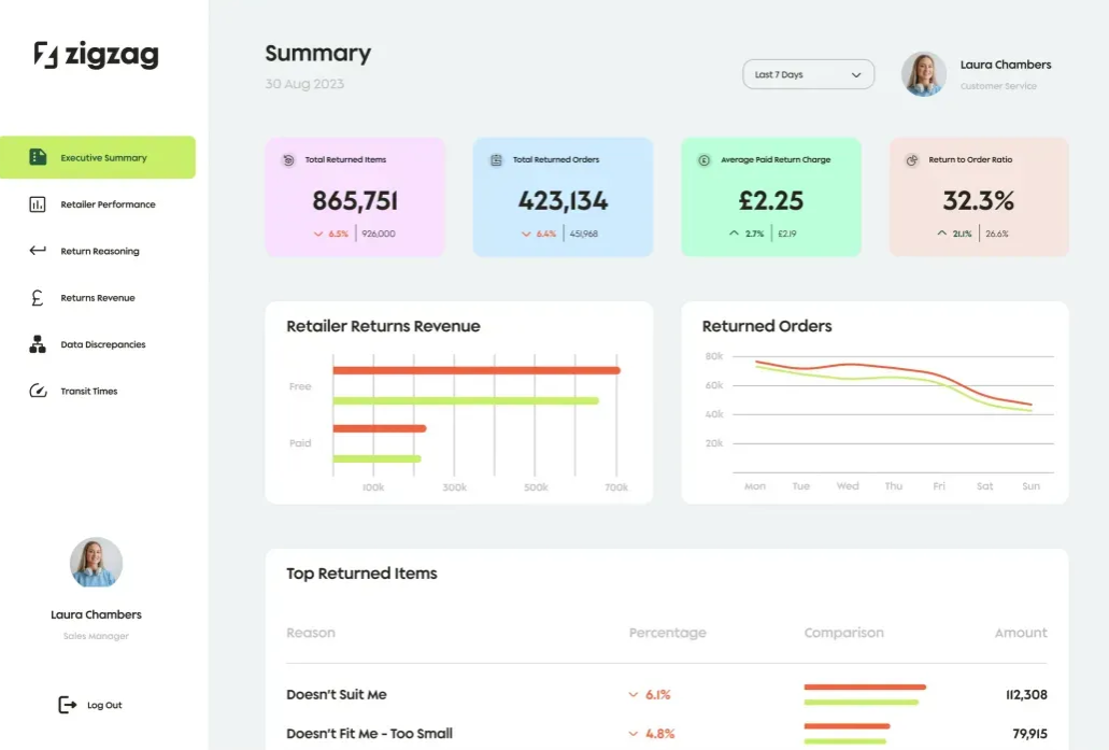
Lastly, you can use your return management software’s return analytics to figure out the common reasons why consumers are dissatisfied with their goods to the point where they want to return them.
➡️ You can use a tool like ZigZag Global to detect suspicious return behaviour from your existing consumers and reduce your return count in the long run.
5 proven strategies to improve post-purchase engagement
#1: Simplify the returns process
My #1 recommendation to improve your post-purchase engagement would be to plan for the worst and simplify the returns process.
How you handle a return would speak a lot about your business as a whole, and you wouldn’t want to have the reputation of the brand that does not do returns or refunds on time.
You want to provide instant return labels and a self-service portal so customers can initiate returns without friction.
➡️ ZigZag Global gives e‑commerce merchants a smoother, more customer-centric returns experience.
Our self‑service returns portal can be fully branded, so your consumers don’t feel like they’re being handed off to a third party.
You can also adapt various new return options, including return to store credit, exchange, or cash refund, depending on customers’ reasons for returning and change the returns rules.
Get a feel of how ZigZag’s tool works in our guided demo: 👇
#2: Automate status updates
Next up, you want to keep buyers informed at every step of the shipping, return or exchange process to build trust and reduce anxiety.
➡️ Bonus points if your status updates are branded.
You can set up customisable notifications via email or SMS whenever a product is being shipped to them or a return’s status changes, such as “Return Received,” “Refund Processed,” or “Exchange Shipped.”
These real‑time updates reduce “where is my order?” inquiries and prevent customers from getting anxious or frustrated.
It’s also a good way to get fewer customer support tickets.
#3: Encourage feedback after delivery of goods
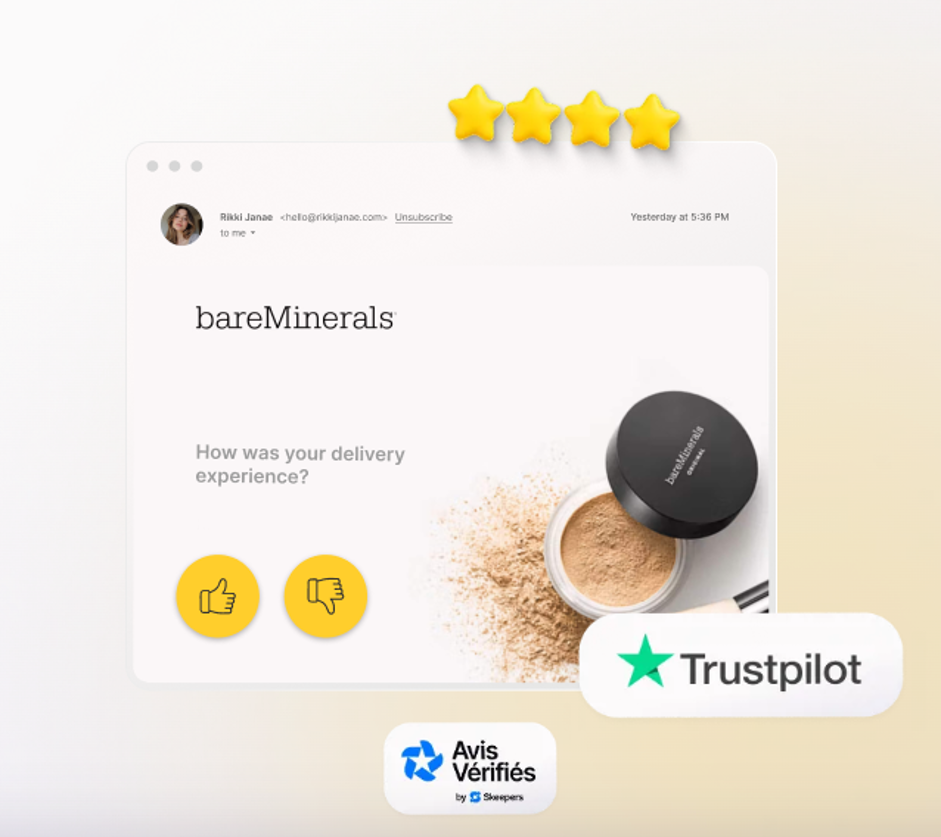
After delivery of the product(s) to your consumer, you can ask them for feedback or a review of your brand to see what they thought about the experience.
You can embed in your email communications a quick survey, such as “rate your delivery experience,” which can help you catch operational issues early on.
For example, Shipup helps you detect dissatisfaction with post-delivery questionnaires that are sent automatically after receipt of the package.
#4: Send personalised follow-ups
If you want to compete with giants like Amazon in your industry, you need to do things they cannot.
There’s no better example than this of sending a personalised follow-up to your customers after they’ve purchased a product to:
Send them some words of gratitude for being a customer.
Provide them with some additional tips on how to use the product.
Ask them what they think about the product and if they’ve had any successes or failures with it.
Recommend complementary products or offer a discount for coming back to your store.
The more effort you put in and the less automation you use here, the better.
#5: Integrate loyalty incentives for consumers (especially if they return a product)
Last but not least, you can reward customers who have already purchased a product or issued a request for a return with discounts or points to turn a one-time purchase or a return into a loyalty-building touchpoint.
Here are a few reward programmes you can set up to improve loyalty in the long run for your e-commerce brand:
Offer loyalty points for each purchase that convert to discount vouchers. (e.g., 1,000 points = £10 off their next purchase).
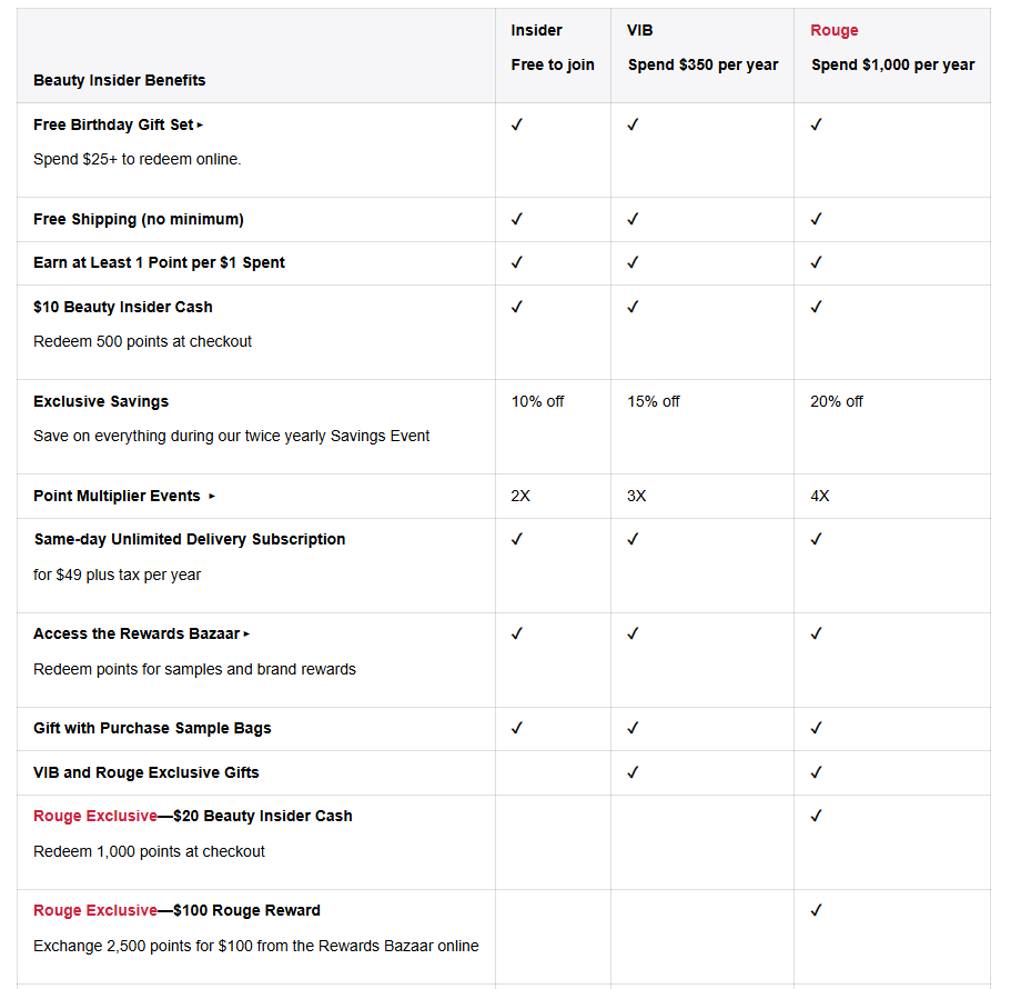
Come up with product purchase tiers that can unlock bonus perks, such as free shipping and exclusive sales.
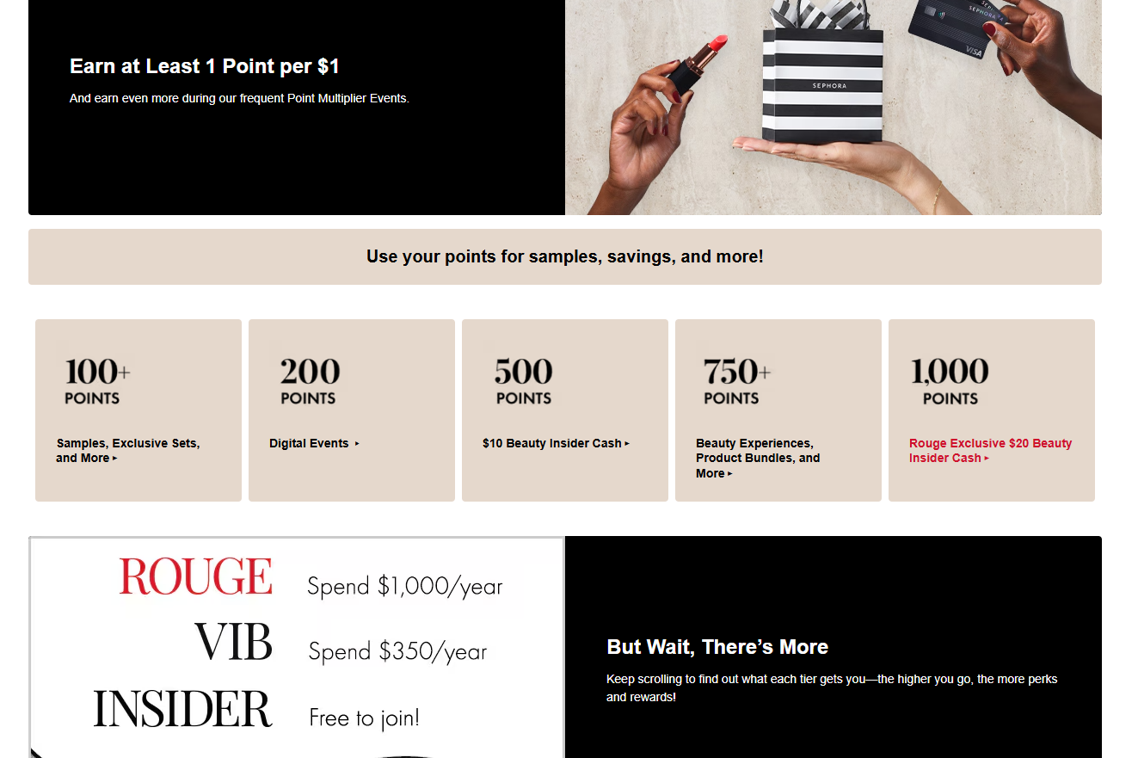
I’ve seen that Sephora does this really well with their Beauty Insider programme that lets you earn at least 1 point per $1 spent with them.
You can then use your points for samples, savings, and digital events.
To top it up, they’ve also built customer tiers, such as an Insider, VIB, and Rouge, with bonus perks on each of these plans, such as first access to certain products and exclusive gifts.
Encourage word-of-mouth by providing consumers with a reward for referring friends (you can also add a discount for the friend as well).
FAQs
#1: What is the difference between pre-purchase and post-purchase behaviour?
The difference between pre-purchase and post-purchase behaviour is that:
Pre-purchase behaviour covers discovery and decision: search, comparison, cart behaviour, and price sensitivity.
Post-purchase focuses on adoption and relationship: usage, satisfaction, returns, and advocacy.
In other (marketing) words, pre-purchase predicts conversion, while post-purchase determines lifetime value, and both influence each other.
#2: What are some examples of post-purchase consumer behaviour?
Here are a few examples of post-purchase consumer behaviour that you can expect:
Writing product reviews or leaving ratings on platforms like TrustPilot or Feefo.
Returning an item or initiating an exchange from your self-service returns portal.
Registering the product, downloading your app, or completing the product setup: prominent in the electronics industry.
Contacting support with questions or issues about the product.
Re-ordering, buying complementary products and referring friends.
#3: What are some of the key factors of post-purchase behaviour
Post-purchase behaviour factors would rely on the following:
The product fit and quality of your solution.
The consumer’s clarity of expectations, including product description.
The overall perceived value-for-money and price fairness.
The additional peace of mind, such as a product warranty and free return option.
It’s also worth mentioning the external factors that influence post-purchase behaviour, such as social proof, community factor, and competitor offers for switching from your solution.
#4: Are there any hidden costs of overlooking the post-purchase behaviour?
Yes, there are hidden costs of overlooking your consumers’ post-purchase behaviour:
Raises your return and support costs if you do not know the reasons why people return products.
It can reduce your customer lifetime value if fixes are not implemented and customers feel ignored.
It can also result in your brand receiving negative reviews, which would start a domino effect of other consumers not buying from you.
Negative word of mouth, which can also mean lost referrals and long-term brand erosion.
Offer a good post-purchase returns experience with ZigZag Global
Built for merchants who operate globally, ZigZag offers an all-in-one platform that is designed to take over any online store’s post-purchase experience.
If you’re an e-commerce leader looking for a returns management platform that offers:
A customisable returns portal that can be personalised to your shoppers.
Wide range of return options, such as paid returns, return to store credit, and return to gift card.
Access to detailed analytics and reports on what drives shoppers to return products.
Then you can book a demo to learn more about ZigZag Global.
By clicking “Accept All Cookies”, you agree to the storing of cookies on your device to enhance site navigation, analyze site usage and assist in our marketing efforts. More info
By clicking “Accept All Cookies”, you agree to the storing of cookies on your device to enhance site navigation, analyze site usage and assist in our marketing efforts. More info
.svg)

.svg)
.svg)
.svg)
.svg) Returns
Returns.svg) Returns Solution
Returns Solution Returns Solutions
.svg) Rating (4.8)
Rating (4.8) Reviews400+
.svg)

 Return arrived at ZigZag Returns Hub

 Returning remaining items
.svg) Join our mailing list
Join our mailing list


.svg)





%20(5).svg)

.svg)

.svg)


.svg)
%20(2).svg)
.svg)





.svg)
.svg)
.svg)


.svg)