Branded Tracking Pages: What Are They and Are They Worth It?
This article covers what a branded tracking page is, how to set one up so customers actually find it useful, and how ZigZag handles it for UK retailers.
Branded Tracking Pages: What Are They and Are They Worth It?
This article covers what a branded tracking page is, how to set one up so customers actually find it useful, and how ZigZag handles it for UK retailers.
TL;DR
A branded tracking page replaces the generic carrier page with one hosted on your own domain and styled to match your shop, so shoppers stay with your brand from checkout right through to the doorstep.
The wait between "order placed" and "delivered" is the most anxious stretch of the whole purchase, and handing it to the carrier quietly costs you website traffic and buries your support team in avoidable questions.
A branded tracking page can also cut the "where is my order" messages landing in your inbox.
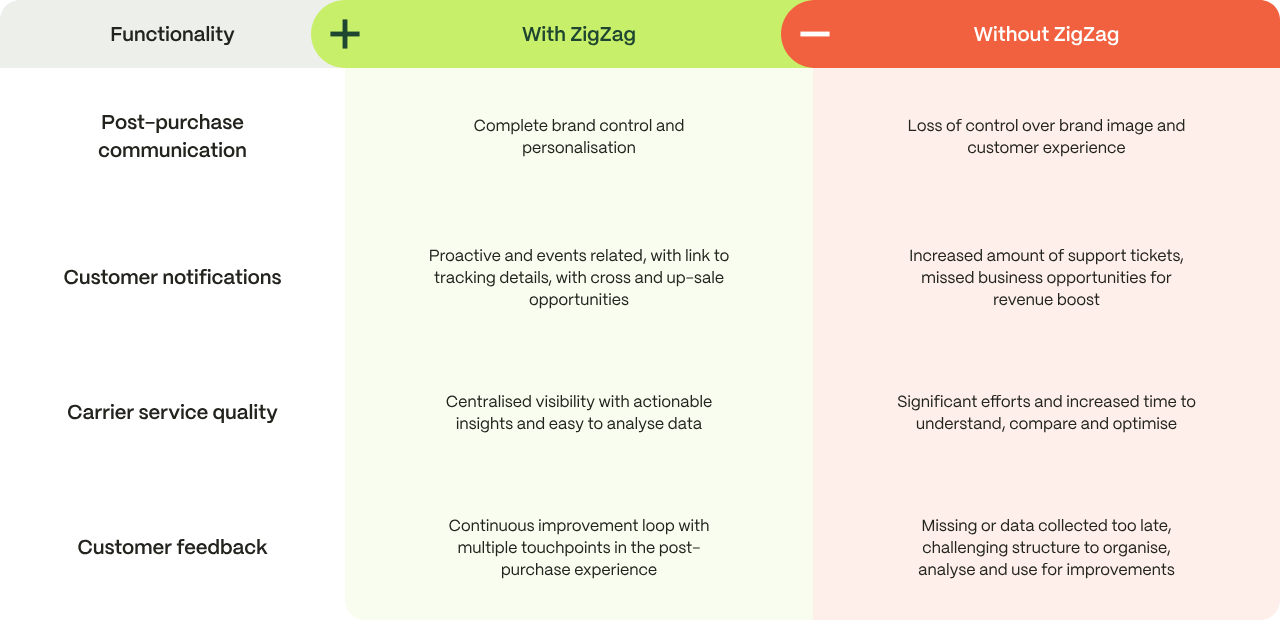
ZigZag builds the page on your domain, turns messy carrier scans into clear updates, and surrounds the order status with product recommendations and self-serve answers, then keeps customers posted.
What Is a Branded Tracking Page?
A branded tracking page is the screen a customer sees when they check where their order has got to, except this one is hosted on your own domain and wears your branding rather than the courier's.
It carries your logo and colours, the web address usually looks something like track.yourstore.co.uk, and it shows the order status next to whatever else a waiting customer might want, from delivery estimates and your returns policy to a couple of products they might fancy next.
Picture the usual flow after someone buys from you.
They get a dispatch email, tap the tracking link, and land on a page run by Royal Mail, Evri or DPD.
That page does the bare minimum, telling them roughly where the parcel has reached, but it does nothing for you.
It wears the courier's branding, sometimes the courier's adverts, and now and then an advert for one of your competitors.
A branded tracking page takes that moment back and puts it to work for your shop.
How Is a Branded Tracking Page Different From a Carrier's Tracking Page?
The real difference is ownership.
A carrier's tracking page is built for the carrier's convenience, not yours.
It shows generic status codes and rarely matches the shop the customer just bought from.
Worse, it gives you no way to talk to that customer or guide them back to your site.
A branded tracking page flips that around:
You control the wording and the look of the page, right down to what appears beside the tracking timeline.
You can translate baffling courier jargon into language a human actually understands, and reassure people the moment something slips.
You can even nudge them towards your returns policy or a product they might like.
And the traffic stays with you.
Every check-in on an order becomes a visit to your domain, and for a busy shop that quietly adds up to a lot of high-intent visits you would otherwise hand to the courier for free.
What Are the Benefits of a Branded Tracking Page?
Once the page is up, the value shows up in a few different corners of the business:
The branded tracking page becomes your marketing touchpoint
The tracking page becomes a channel you genuinely own, and post-purchase pages and emails get opened at rates most campaigns would kill for, simply because the customer actually wants the information.
ZigZag's own post-purchase notifications, for example, see open rates of around 60% to 70%, well clear of the 15% to 30% a typical marketing newsletter manages.
That much attention is space to show off new arrivals or float a loyalty prompt, all without ever asking the customer to opt in to anything.
Reduce customer support tickets
When the answer to "where is my order" is one tap away on a page the customer trusts, far fewer of those questions ever reach your inbox.
Brands using ZigZag's post-purchase tools have seen WISMO contacts drop by up to 70%, which hands your agents back the hours they were spending copying tracking numbers into reply templates.
Protect customers from fraud
UK shoppers are drowning in fake delivery texts pretending to be Royal Mail or Evri, usually demanding a couple of quid to "release" a parcel that does not exist.
When your customers are used to hearing from you, on your own domain, a scam message stands out a mile.
You also stop handing the final and most emotional touchpoint of the purchase to a third party that has no real stake in whether the customer ever comes back.
Make more data-driven decisions
There is a quieter benefit working away behind the scenes.
Pulling tracking events from every courier into one place shows you which carriers run slow and where parcels tend to stall.
That visibility can be the groundwork for holding carriers to their service levels and pushing for better rates at renewal.
How Do You Build a Branded Tracking Page That Customers Actually Use?
Setting up a branded tracking page is simple enough.
Building one customers find genuinely helpful takes a bit more thought, and these are the parts worth getting right:
Make it look like the rest of your store
The page should feel like a continuation of your checkout, carrying the same logo and tone of voice, hosted on your own domain so even the web address looks trustworthy.
The language matters just as much.
Raw courier events are written for logistics systems, not shoppers, so a status like "inbound to depot" means very little to someone waiting on a birthday present.
The pages that work translate those codes into updates a normal person can read and act on.
Make the tracking pages easy to reach
Access trips up more retailers than you would expect.
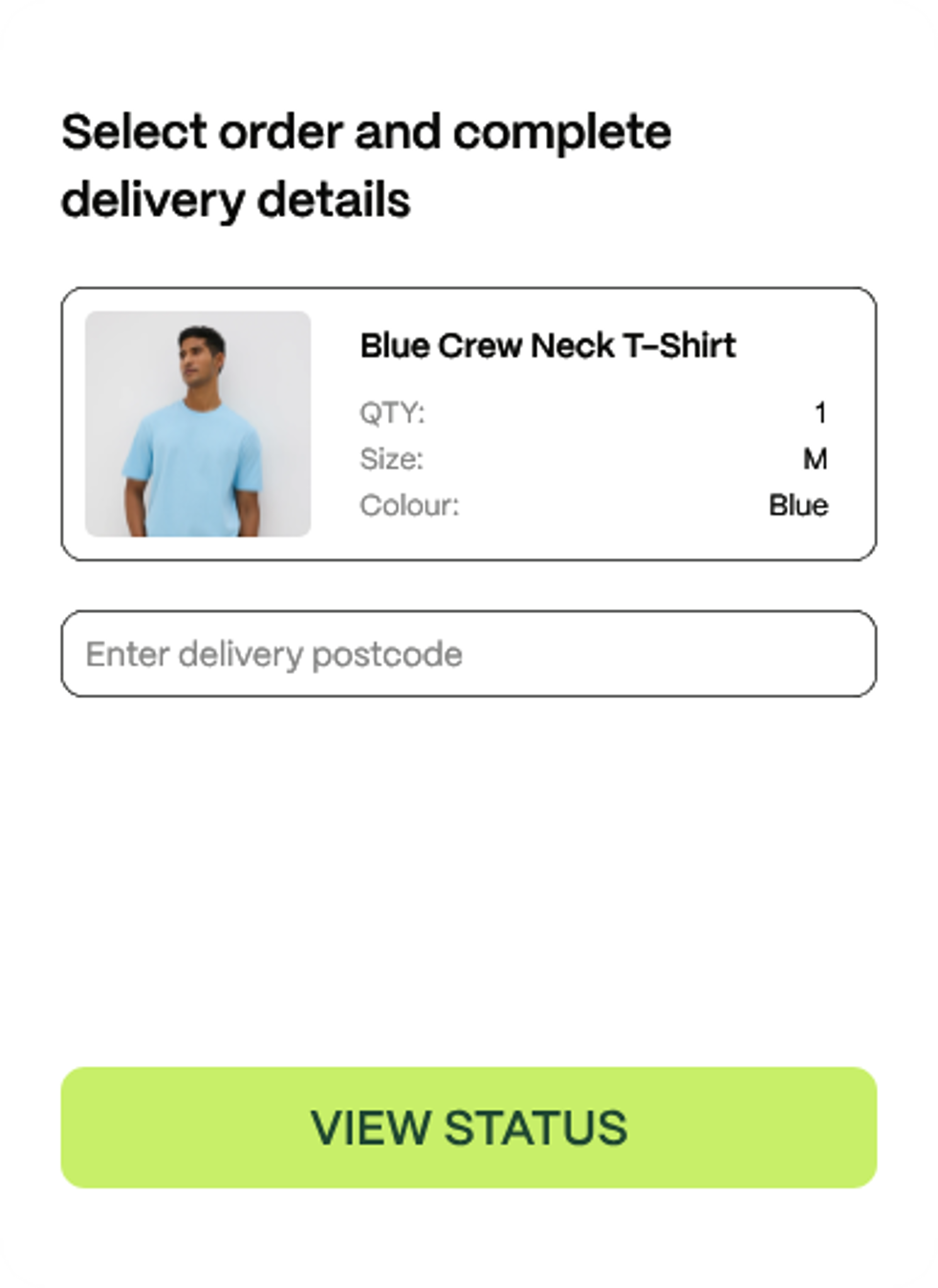
Asking someone to dig a 16-digit tracking number out of a three-day-old email is enough friction to send them straight to your support team, so let customers open the page from a notification, or find their order with nothing more than an email address and postcode.
While they are there, an honest delivery estimate does a lot of the reassuring for you. People handle waiting far better when they know what they are waiting for, and a clear date set early and kept accurate heads off most of the anxious refreshing that ends up as a ticket.
Utilise the real estate on the page
The space around the status is your chance to make the page pull its weight commercially.
Product recommendations belong here, and so do answers to the delivery questions customers tend to have at this exact moment, because their attention is already on the page.
The one rule worth holding to is restraint.
The order status has to stay the star of the show, with everything else in a supporting role.
A tracking page buried under cross-sells stops being useful and can start feeling like a billboard.
Figure out how you’re going to communicate delays
This part matters more than almost anything else on the list.
Delays are going to happen. What actually damages trust is the silence around them.
A page and a notification that flag a hold-up early and explain it like a human will often leave a customer warmer towards your brand than a flawless delivery that said nothing at all.
Handled well, a rocky delivery can do more for loyalty than a smooth one ever does.
So, Are Branded Tracking Pages Worth It?
For most retailers shipping a real volume of parcels, the answer is yes, with one honest caveat.
A branded tracking page only pays off if you actually use the space well.
Build one that mirrors your shop, speaks like a human, stays easy to reach and tells the truth when things slip, and it pulls traffic back to your site and trims your support costs while giving customers one more reason to return.
Slap your logo on a raw carrier feed and call it a day, and you have spent effort for very little back.
The reason it usually pays off is that the delivery window is attention you have already won.
The customer wants to know where their order has got to, so they are going to look.
The only question left is whether they look at a page working for your brand or one working for somebody else's.
Given how much repeat revenue rides on how that wait feels, keeping the moment on your own turf is, for most shops, effort well spent.
You can set up branded tracking pages with ZigZag Global to deliver a post-purchase journey that builds trust, boosts revenue, and reduces your operational costs.
Get in touch with our experts, and we will answer any questions you might have around building a branded tracking page that your customers love.
Book a demo with our experts
Frequently Asked Questions
What is the difference between a branded tracking page and a tracking notification?
A tracking page is somewhere the customer goes to check on an order. A notification is a message you send out to them.
The two work best as a pair: notifications do the reassuring without the customer lifting a finger, and the page is there for the moments they want the full detail.
Do I need a separate tracking page for every carrier I use?
No. A decent post-purchase platform pulls events from all your carriers into one standardised format, so a single branded page works across every courier you ship with, from Royal Mail and DPD through to your international partners.
Will a branded tracking page really cut support tickets?
By clicking “Accept All Cookies”, you agree to the storing of cookies on your device to enhance site navigation, analyze site usage and assist in our marketing efforts. More info
By clicking “Accept All Cookies”, you agree to the storing of cookies on your device to enhance site navigation, analyze site usage and assist in our marketing efforts. More info
.svg)

.svg)
.svg)
.svg)
.svg) Returns
Returns.svg) Returns Solution
Returns Solution Returns Solutions
.svg) Rating (4.8)
Rating (4.8) Reviews400+
.svg)

 Return arrived at ZigZag Returns Hub

 Returning remaining items
.svg) Join our mailing list
Join our mailing list


.svg)





%20(5).svg)

.svg)

.svg)


.svg)
%20(2).svg)
.svg)





.svg)
.svg)
.svg)


.svg)