Post-Purchase Loyalty: How To Boost Your NPS In 2026?
This article covers what post-purchase loyalty really means, why the delivery phase quietly decides your NPS, and the practical moves that lift the score once the sale is already done.
This article covers what post-purchase loyalty really means, why the delivery phase quietly decides your NPS, and the practical moves that lift the score once the sale is already done.
TL;DR
Post-purchase loyalty is won or lost in the quiet stretch between checkout and the parcel landing on the doormat, the exact window where most brands hand the shopper to a courier and go dark.
NPS measures how likely someone is to recommend you, and few things move that number around like the delivery experience.
The levers are unglamorous but effective: you want to set honest delivery expectations early, keep people informed through transit, own up fast when something breaks, and ask for feedback at a sensible moment.
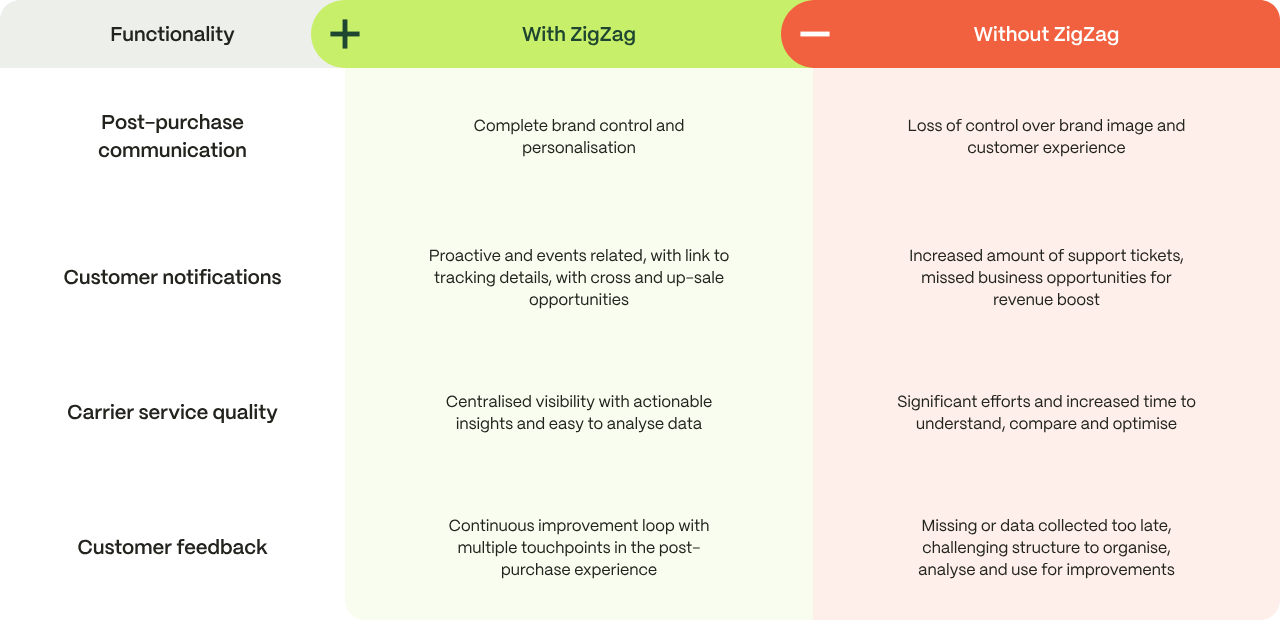
Proactive, branded communication across email, SMS, WhatsApp, and Apple Wallet is what holds the score together, and it is the gap a platform like ZigZag is built to close, even on the days a delivery misbehaves.
What Is Post-Purchase Loyalty, And Why Does It Decide Your NPS?
Post-purchase loyalty is the goodwill a customer builds up (or quietly drains) after they tap "buy now."
It runs through order confirmation, fulfilment, the long days in transit, the delivery, and any returns that follow.
Most marketing money goes into the bit before the sale.
Then the shopper gets handed to a courier, and the brand more or less vanishes for the next three to five days.
That silent window punches well above its weight.
The figures here are disappointing: 56% of shoppers come away disappointed by their ecommerce post-purchase experience, and 80% of those take their next order to a competitor.
You can run a slick acquisition funnel and a checkout that converts beautifully, then lose the repeat purchase because someone spent a week refreshing a courier page that told them nothing useful.
Loyalty in 2026 leans less on points and perks and more on whether the wait after checkout felt calm and under control.
And your Net Promoter Score (NPS) is one of the cleaner ways to put a figure on whether you got that wait right.
What Exactly Is NPS, And What Counts As A Good Score?
NPS comes from a single question: how likely are you to recommend this brand to a friend, scored from 1 to 10
The answers fall into three buckets:
Nine or ten makes someone a Promoter.
Seven or eight a Passive.
Anything from zero to six a Detractor.
You then take the percentage of Promoters, subtract the percentage of Detractors, and you land on a figure somewhere between minus 100 and plus 100.
As a loose guide, a positive score means your fans outnumber your critics, north of 50 is genuinely good, and clearing 70 is rare and usually reserved for the brands people actively rave about.
Why Does The Delivery Phase Pull So Hard On That Score?
A customer waiting on an order is on edge in a way they rarely are at any other point in the relationship.
They have paid, they want the product, and every silent day nibbles at the warm glow they had at checkout.
When the only word comes from a generic courier page, doubt creeps in, and doubt has an unfair habit of latching onto the brand instead of the courier who actually caused it.
Most of your Promoters and Detractors will get decided right here.
A delivery that turns up on time but in total silence tends to produce a shrug, which is a Passive.
A delivery that runs late while the brand says nothing produces a Detractor, and occasionally a very loud one.
The reason this phase weighs so heavily is simple arithmetic: it is the longest stretch of waiting in the whole relationship, and waiting in the dark feels far worse than waiting with a steady drip of updates.
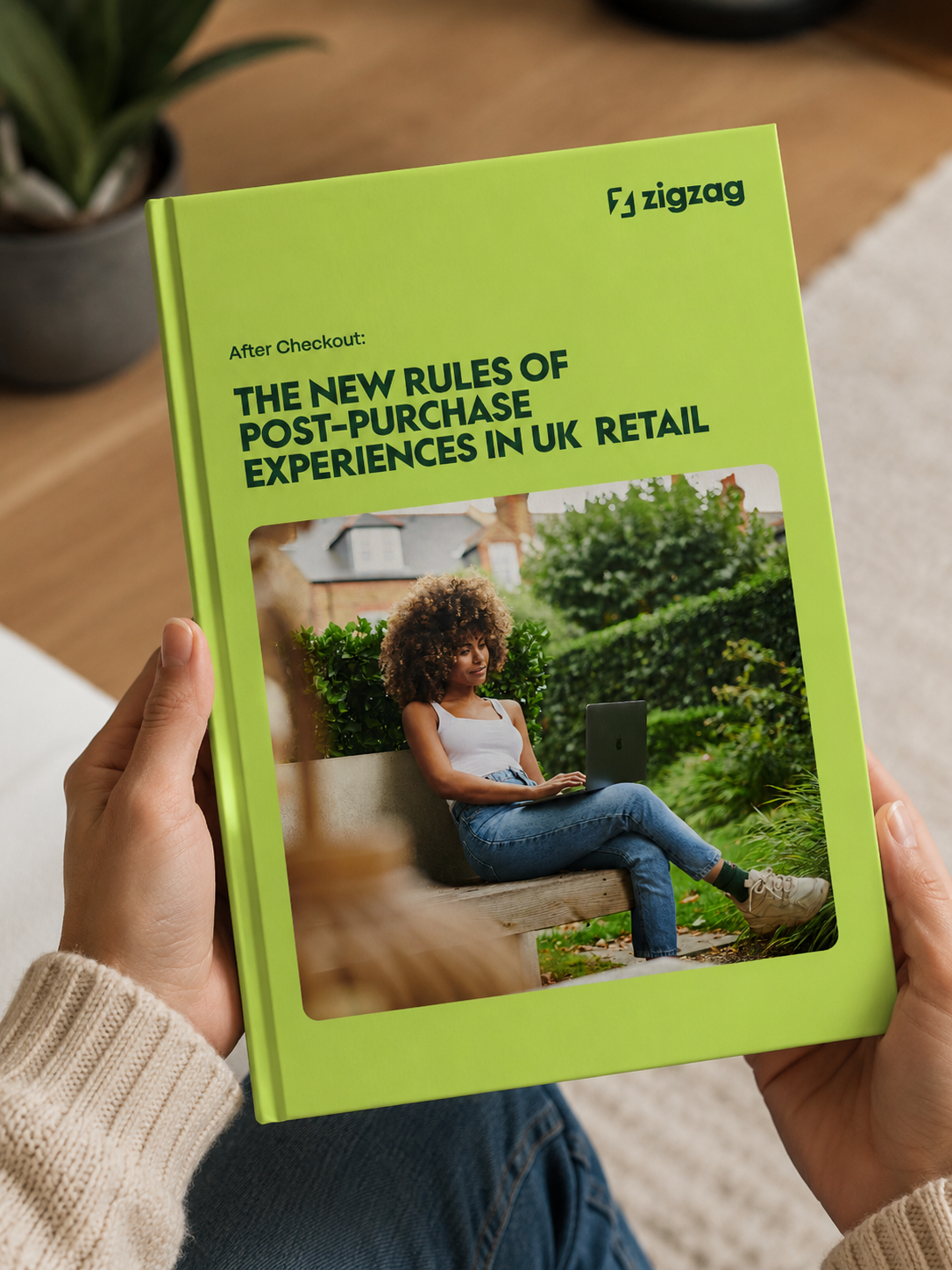
Before we start you can look advice for boosting your NPS in our recent Post-Purchase Report
Which Moments After Checkout Decide Your NPS?
Lifting your score rarely takes a grand gesture.
Mostly it is about handling a handful of moments well, the points where a shopper is paying closest attention.
Below are the ones that do most of the work, and what to do with each:
Setting Delivery Expectations Before The Order Is Placed
The post-purchase experience quietly begins on the product and checkout pages, before a penny changes hands.
An accurate, specific delivery date there does two useful jobs:
It nudges a wavering shopper over the line.
It sets the yardstick they will measure everything else against.
If you promise next-day and land on day four, and you have manufactured a Detractor before the parcel has even left the warehouse.
This is why you want to give a realistic date the parcel then beats by a day, and you have a quietly delighted customer who feels you over-delivered.
Getting that right means pulling the date from live carrier and lane performance instead of a flat "three to five working days", which is the kind of calculation ZigZag's Smart Delivery Estimates run automatically.
The Right Cadence For Updates During Transit
Once the parcel is moving, you are aiming for steady reassurance without becoming the brand that pings someone eleven times about a single pair of socks.
A typical order only needs three to five well-timed messages: it has shipped, it is on its way, and it is out for delivery today.
Send fewer, and people fill the silence by emailing your support team.
Send more, and you train them to swipe you away, which is worse, because then your genuinely important "your parcel is at the pickup point" message gets swiped away with everything else.
The hard part hides under the surface.
Every carrier reports events in its own dialect, so a delay from Royal Mail looks nothing like a delay from Evri or DPD, and timing a clean message off that mess is fiddly.
That messy translation is the part ZigZag takes over, by helping you normalise tracking from over 1,500 carrier services into one standard set of more than 60 event triggers, then firing each update over email, SMS, WhatsApp, or Apple Wallet with fallback logic that reroutes when the first channel can't reach someone.
As the messages concern goods a shopper has already paid for, they tend to pull open rates of 60 to 70 percent, which is well above a typical marketing email.
Be Prepared For When A Delivery Goes Wrong
Delays, lost parcels, and the dreaded "arrived damaged" are the real exam for post-purchase loyalty, and also your single biggest chance to protect the score.
The natural human urge when something breaks is to go quiet and hope nobody notices.
That urge is wrong every single time. Silence reads as not caring, and a customer who feels ignored mid-disaster can harden into a committed Detractor fast.
Brands that hold their score through an incident move quickly and honestly.
They explain what went wrong in language a stressed human can actually absorb, say clearly what they are doing about it, and pull the cheerful cross-sell banners out of that particular email so it doesn't read like the brand is trying to upsell them while their birthday present is stuck somewhere in a depot.
The smartest setups catch trouble even earlier than that: ZigZag's Smart States watch for the events that fail to happen, a tracking number that never generates or a parcel that lingers past its expected scan, and either reassure the customer with a fresh timeline or flag an internal team to step in before the shopper notices a thing.
Optimise Your Order Tracking Page
The tracking page is, oddly, one of the most-visited pages in your entire relationship with a customer.
People often check it obsessively, sometimes four or five times before lunch, and most brands hand all that attention straight to a courier.
Host the tracking on your own domain and you keep the shopper inside your world during the days they are most glued to their phone.
You also keep them clear of the courier-branded phishing texts that have become depressingly common, and away from a rival carrier's ads parked next to your customer's order.
Done well, the page pulls its weight beyond showing a little van crawling across a map.
A slot for relevant product recommendations can also turn an information page into a soft second storefront, and a short FAQ block answering the obvious delivery and returns questions heads off support tickets at the precise moment someone would otherwise reach for the contact form.
Ask For Feedback
Timing is the difference between a survey that tells you something and one that just lets someone vent.
You want to ask a day or two after delivery confirms, while the box is still in the hallway and the experience is fresh.
💡After delivery, ZigZag’s system automatically deploys NPS and satisfaction surveys to measure the customer's experience.
This feedback is specifically segmented by carrier to identify exactly which logistics partners are performing well or poorly.
Your team can then use this data to take targeted action on unsatisfied customers and improve overall service.
Try & Win Back An Unhappy Customer Before They Leave
Collecting NPS scores does nothing on its own. The number only improves when you act on what it tells you.
This is why reaching out to a Detractor while the frustration is still raw gives you a real shot at saving the relationship, and customers who feel properly heard after a bad experience often swing all the way back round to recommending you.
Beyond the individual saves, the less glamorous work matters more: fixing the root cause.
If your carrier-segmented feedback keeps pointing to the same courier for the same complaint, that is a contracts conversation, and no amount of customer service charm will fix it from that end.
The tickets that do reach your agents get easier to clear when the tracking history is one click away inside the helpdesk, which is what ZigZag's Chrome extension and its Zendesk and Gorgias integrations are for.
Pull all of it together, and retailers tend to see more repeat purchases, which is what loyalty looks like once it finally shows up where it counts: on the next order.
Ready To Turn Your Delivery Experience Into A Loyalty Engine?
Post-purchase loyalty is not really won with a clever rewards scheme.
It is won in the small, anxious moments after checkout, when a shopper wants to know where their order is and whether they were right to trust you.
You want to get the delivery date honest, the updates timely, and the bad news moments handled with a bit of grace, and the NPS tends to look after itself.
Go quiet, and you spend your marketing budget acquiring customers who quietly leave for a competitor that bothered to keep them informed.
The catch is that doing all of this by hand, across a dozen carriers that each speak their own language, is the kind of job that eats a team alive.
That is the work ZigZag takes off your plate, turning raw tracking into branded, proactive communication that holds the score together even when a parcel goes astray.
If you would like to see what that looks like on your own orders, book a demo and we will walk you through it.
Book a demo with the post-purchase experts
FAQs
What counts as a good NPS for an ecommerce brand?
Anything above zero means more Promoters than Detractors, and clearing 50 is a strong result in most retail categories.
Benchmarks swing widely by sector, though, so your own trend over time will always tell you more than a number borrowed from a different industry.
How is post-purchase NPS different from overall brand NPS?
Overall NPS captures how people feel about your brand in general.
Post-purchase NPS, measured shortly after delivery, isolates how the fulfilment and delivery leg landed specifically, which makes it far more useful for decisions about logistics and customer service.
Can better communication really lift NPS, or is it all about delivery speed?
Speed helps, but communication often does more of the heavy lifting.
A slightly slower delivery wrapped in clear, proactive updates tends to outscore a fast one delivered in total silence, because customers judge the whole thing by how informed and in control they felt along the way.
Does cutting WISMO tickets actually build loyalty?
It does, on two levels.
Every WISMO contact is a small flag that a customer felt uninformed, so shrinking that volume usually means you have answered the worry before it has a chance to take hold.
It also frees your agents to spend proper time on the genuinely tricky cases, which are the ones that shape how a customer really feels about you.
By clicking “Accept All Cookies”, you agree to the storing of cookies on your device to enhance site navigation, analyze site usage and assist in our marketing efforts. More info
By clicking “Accept All Cookies”, you agree to the storing of cookies on your device to enhance site navigation, analyze site usage and assist in our marketing efforts. More info
.svg)

.svg)
.svg)
.svg)
.svg) Returns
Returns.svg) Returns Solution
Returns Solution Returns Solutions
.svg) Rating (4.8)
Rating (4.8) Reviews400+
.svg)

 Return arrived at ZigZag Returns Hub

 Returning remaining items
.svg) Join our mailing list
Join our mailing list


.svg)





%20(5).svg)

.svg)

.svg)


.svg)
%20(2).svg)
.svg)





.svg)
.svg)
.svg)


.svg)