How To Create a Complete Post-Purchase Experience in 2026
Most ecommerce retailers pour their budget into getting customers to click "buy." But what happens after that click is where loyalty is actually built, or broken.
Most ecommerce retailers pour their budget into getting customers to click "buy."
But what happens after that click is where loyalty is actually built, or broken.
The post-purchase experience covers everything from the moment a customer completes their order to the point they receive their product, potentially return it, and (ideally) come back for more.
It includes order confirmation, shipping updates, delivery, returns, and every communication touchpoint in between.
And in 2026, it has become the single biggest differentiator for UK online retailers competing for repeat business.
Why UK retailers can no longer ignore what happens after checkout
That is an enormous volume of parcels, tracking queries, and return requests flowing through retailers' operations every single day.
Yet most brands are still pouring resources into acquisition while treating the post-purchase journey as an afterthought. The numbers tell the story of what that costs.
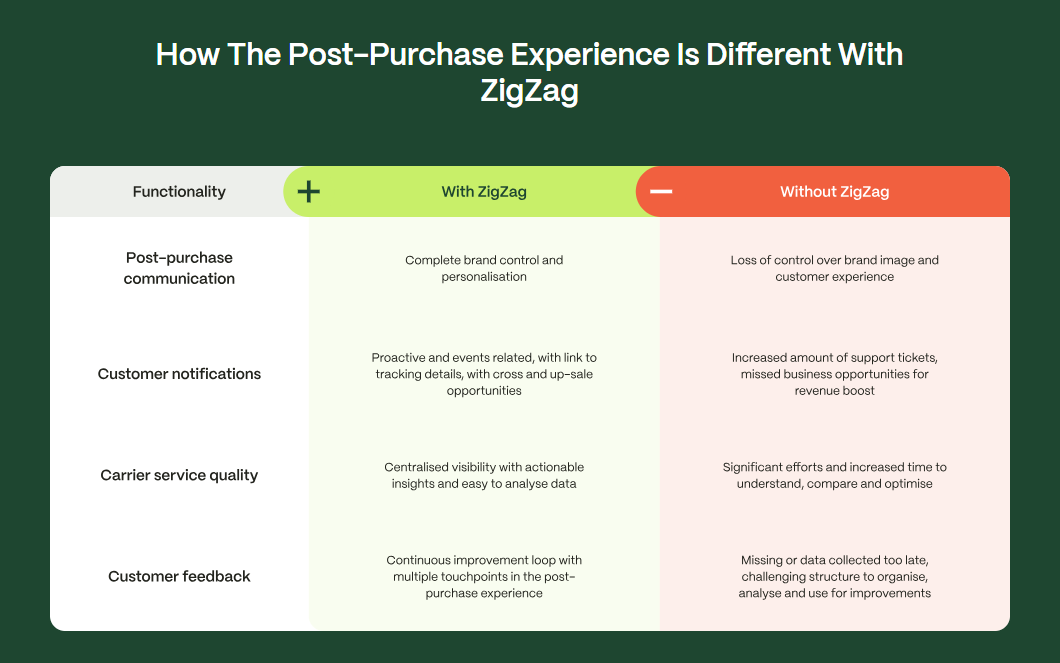
WISMO ("where is my order") queries account for 30% to 40% of all ecommerce support tickets, and that figure climbs above 50% during peak seasons.
Every unanswered tracking question is a trust fracture.
The good news? The post-purchase experience is not just a cost centre. When it is done well, it becomes a revenue engine.
The five stages of a complete post-purchase experience
Creating a genuinely complete post-purchase journey means covering every stage, from the order confirmation email to the moment a customer decides to buy from you again.
Here is how to build each stage properly.
1. Order confirmation and setting expectations
The post-purchase experience starts the second a customer completes their order.
A well-crafted order confirmation does more than confirm payment. It sets the tone for the entire experience.
Your confirmation should include clear estimated delivery dates, not vague "3-5 business days" ranges.
Customers want specificity. If you can tell them their order will arrive on Thursday, tell them Thursday.
This is also your first opportunity to personalise. Include the customer's name, a summary of what they ordered, and relevant next steps.
If you sell products that benefit from usage guidance (think skincare routines or assembly instructions), this is the perfect moment to share that content.
2. Branded tracking and proactive delivery notifications
This is where most retailers hand the experience over to their carrier, and where most of the trust erosion happens.
A generic carrier tracking page does nothing for your brand. The customer has left your world and entered someone else's.
Branded tracking pages keep customers within your ecosystem. Instead of checking a carrier's website, they visit a tracking page that carries your branding, your product recommendations, and your messaging.
That is three to six opportunities to re-engage them, cross-sell, or simply reinforce that they made the right choice buying from you.
Proactive delivery notifications are equally critical. Rather than waiting for a customer to wonder where their parcel is, send updates at key milestones: dispatched, out for delivery, delivered.
Multichannel notifications across email, SMS, and even WhatsApp ensure the update reaches them wherever they are.
The result? Fewer WISMO tickets, happier customers, and a tracking experience that drives traffic back to your site rather than to a carrier's.
3. Delivery and the unboxing moment
The physical delivery is the emotional peak of the post-purchase journey. Everything up to this point has been anticipation.
Now the customer is holding the product.
For UK retailers, carrier choice and performance matter here.
First-time delivery success rates, accurate time windows, and reliable handling all contribute to the customer's perception of your brand, even though you did not drive the van.
This is where centralised carrier data becomes invaluable.
If you can see delivery performance across all your carriers in one dashboard, you can spot issues early, hold carriers accountable, and make smarter routing decisions for future orders.
Post-delivery, collect feedback while the experience is still fresh.
A simple "How was your delivery?" prompt, sent within 24 hours of delivery, gives you actionable data and shows the customer that you care about their experience beyond the transaction.
4. Returns and exchanges
Returns are the make-or-break moment for customer retention.
If a shopper finds your returns process confusing, slow, or opaque, the chances of them buying from you again drop sharply.
Get it right, though, and a smooth return can actually strengthen their loyalty to your brand.
A complete returns experience in 2026 needs to include several elements.
First, a branded returns portal where customers can initiate their return, select their reason, and choose their preferred return method, whether that is home collection, drop-off at a local shop, or returning in-store.
Second, multiple return options.
Not every customer wants to queue at a Post Office. Offering a choice between printed labels, paperless QR codes, and drop-off networks gives customers the convenience they expect.
Third, visibility. Customers want to know where their return is and when their refund will be processed.
Automated tracking updates throughout the returns journey reduce "where is my refund" queries in the same way delivery tracking reduces WISMO.
Fourth, consider how returns communication is delivered.
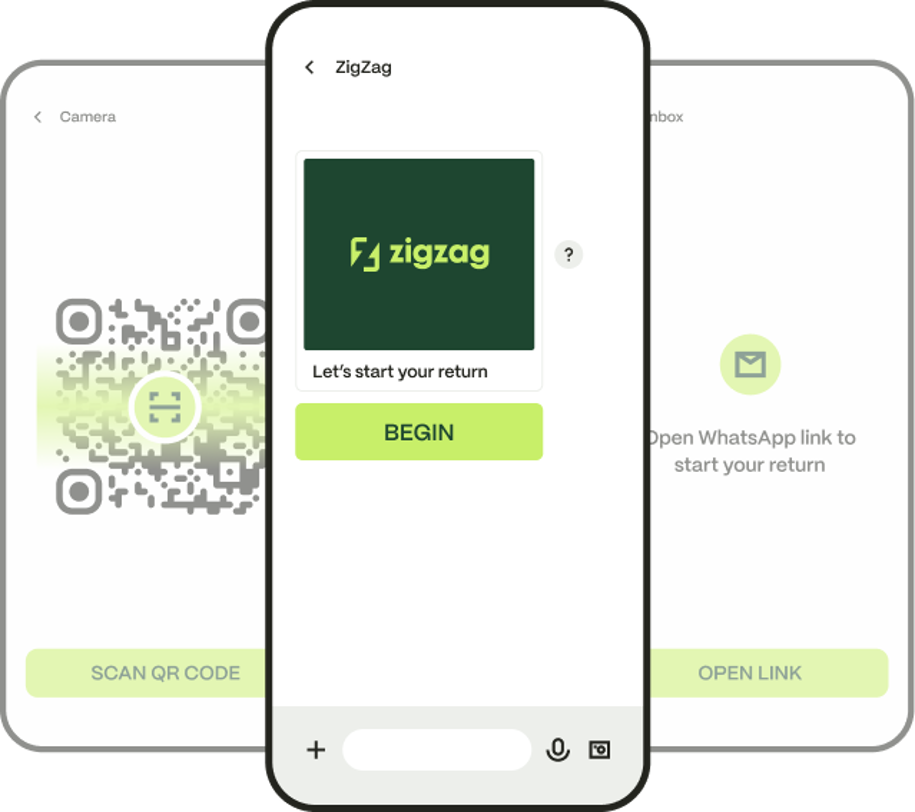
With WhatsApp now used by millions of UK consumers daily, offering returns initiation and label delivery directly through a WhatsApp chat removes friction entirely.
Customers scan a QR code from their parcel, start a return in WhatsApp, receive their label in the chat, and can check their return status without searching through emails or logging into portals.
Finally, use returns data intelligently. Understanding why products are being returned (sizing issues, quality concerns, misleading images) allows you to fix problems at the source and reduce return rates over time.
5. Re-engagement and building long-term loyalty
The post-purchase journey does not end when the product is delivered or the return is processed. This is where the cycle begins again.
That is a clear signal: the retailers who treat post-purchase communication as a marketing channel, rather than an operational necessity, are the ones building genuine customer lifetime value.
Post-delivery emails with personalised product recommendations, loyalty programme invitations, and review requests all play a role here.
When a customer has just had a positive delivery experience and feels good about their purchase, they are far more receptive to these messages than at any other point in the buying journey.
How ZigZag brings the complete post-purchase experience together
Building each of these stages individually is possible, but complicated.
You end up stitching together separate tools for tracking, notifications, returns, carrier management, and analytics, each with its own data silo.
Rather than managing each stage in isolation, ZigZag connects the entire journey, from checkout to refund, into a single platform. Here is how that works in practice.
Branded tracking and multichannel notifications
ZigZag transforms carrier tracking data into smart status updates that trigger personalised messages to customers across email, SMS, and other channels.
Tracking pages are fully branded to the retailer, turning every status check into an opportunity for cross-sell and re-engagement.
The platform's delivery notifications have achieved open rates of 65% and click-through rates of 30%, alongside a 30% increase in repeat purchases for retailers using the tool.
Reduced support burden
By centralising delivery data and pushing proactive notifications, ZigZag helps retailers cut support ticket volume significantly.
Retailers using the platform have seen a 40% reduction in WISMO queries, with support teams resolving remaining tickets 50% faster because all carrier data sits in one place.
Returns portal with WhatsApp Returns
ZigZag's returns portal gives shoppers a branded, customisable experience with options including paid returns, return to store, and paperless drop-off across a network of 1,500 carrier services in over 170 countries.
For UK retailers, ZigZag also offers WhatsApp Returns, allowing customers to initiate and complete returns entirely within WhatsApp.
Labels are delivered straight into the chat, payment for paid returns is handled seamlessly through mobile wallets, and there are no portals, logins, or friction.
The entire journey happens in a channel customers already use every day.
Carrier claims and cost recovery
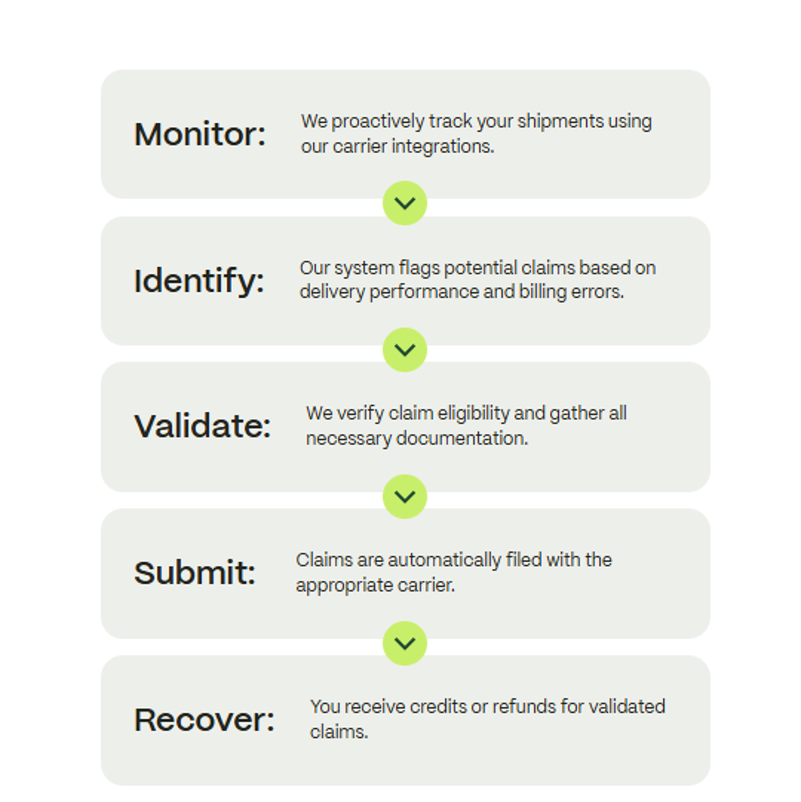
ZigZag's automated carrier claims service identifies and recovers funds from late deliveries, billing errors, lost parcels, and damaged goods.
For retailers processing high volumes of shipments, this turns a drain on operational resources into recovered revenue.
The bottom line
The post-purchase experience is no longer a back-office function. It is a revenue driver, a loyalty builder, and increasingly, the thing that determines whether a first-time buyer becomes a repeat customer.
For UK retailers navigating rising return rates, growing customer expectations, and the pressure to do more with less, getting the post-purchase journey right is not optional. It is the competitive advantage.
If you are ready to turn your post-purchase experience into a complete, connected journey, book a demo with ZigZag to see how the platform works for your business.
By clicking “Accept All Cookies”, you agree to the storing of cookies on your device to enhance site navigation, analyze site usage and assist in our marketing efforts. More info
By clicking “Accept All Cookies”, you agree to the storing of cookies on your device to enhance site navigation, analyze site usage and assist in our marketing efforts. More info
.svg)

.svg)
.svg)
.svg)
.svg) Returns
Returns.svg) Returns Solution
Returns Solution Returns Solutions
.svg) Rating (4.8)
Rating (4.8) Reviews400+
.svg)

 Return arrived at ZigZag Returns Hub

 Returning remaining items
.svg) Join our mailing list
Join our mailing list


.svg)





%20(5).svg)

.svg)

.svg)


.svg)
%20(2).svg)
.svg)





.svg)
.svg)
.svg)


.svg)