This guide breaks down exactly why most retailers get post-purchase upselling wrong and how to it well.
Picture this. A customer just bought a winter coat from your online store. They are excited, engaged, and paying attention to every update you send them.
They check their order confirmation. They track their parcel three, four, maybe five times before it arrives. They open every shipping notification you send.
And what do most retailers do with all that attention? Nothing.
They hand the customer off to a generic carrier tracking page, go silent until the parcel lands, and then wonder why that customer never comes back.
This is the post-purchase gap, and it is costing UK and European e-commerce retailers billions in lost repeat revenue every year.
Research from Radial found that nearly 80% of consumers would not buy again from a brand after a poor post-purchase experience. Yet only 18% of retail leaders think their post-purchase experience needs work.
The good news? Post-purchase upselling, when done right, generates some of the highest conversion rates in all of e-commerce.
The checkout is already complete. The customer is already in a buying mindset. All you need to do is show up at the right moment with the right offer.
This guide breaks down exactly why most retailers get post-purchase upselling wrong, what the best-performing brands do differently, and how you can turn every post-purchase interaction into a revenue opportunity in 2026.
What is post-purchase upselling?
Post-purchase upselling is the practice of presenting additional product offers or upgrade opportunities after a customer has already completed their checkout.
Unlike pre-purchase upselling, which risks adding friction to the buying process and driving cart abandonment, post-purchase offers appear at moments when the original sale is already secured.
These moments include order confirmation pages, shipping notification emails, branded tracking pages, delivery update messages, and even returns portals.
The customer cannot un-buy the item they just purchased, which means every post-purchase offer carries zero risk to your existing revenue.
Across e-commerce more broadly, upselling and cross-selling contribute 10 to 30% of total revenues.
Brands that prioritise post-purchase strategies see revenue increases of 15 to 25% compared to competitors who focus solely on acquisition.
And repeat customers, who are 5 to 25 times cheaper to sell to than new prospects, already drive around 40% of revenue for most online stores.
Post-purchase is no longer a niche concern. It is one of the fastest-growing segments of e-commerce technology.
Why most retailers get post-purchase upselling wrong
The data on post-purchase failures is stark: but what is going wrong? Here are the four most common mistakes retailers make.
Mistake 1: Treating post-purchase as an afterthought
In most retail organisations, nobody owns the post-purchase experience.
Marketing focuses on acquisition. Product teams optimise the checkout funnel. Operations handles shipping.
But once the customer clicks "Buy," there is a brand presence vacuum that stretches from checkout all the way to delivery, and often beyond.
As RetailWire reported, the post-purchase experience remains an afterthought for the majority of retailers.
There is typically no single person within an organisation who takes full ownership of the customer journey after checkout.
Mistake 2: Ignoring delivery and returns as upsell touchpoints
Here is a statistic that should stop every e-commerce leader in their tracks: customers check their tracking pages an average of 3 to 5 times per order.
According to Outvio, some data puts this figure at 4.6 visits.
Yet most retailers hand their customers off to a generic carrier tracking page at exactly this moment.
DHL, Evri, Royal Mail, and DPD (whatever the carrier), the customer leaves your brand entirely and enters a logistics interface with zero product recommendations, zero loyalty prompts, and zero upsell opportunities.
Every one of those tracking page visits is a missed brand impression and a missed sale.
The returns phase is equally neglected. Research from Narvar shows that 96% of customers will buy again from a business that offers an “easy” or “very easy” return policy.
Yet two-thirds of retailers offer no exchange process at all.
When a customer wants to return a product, most retailers simply process the refund and wave goodbye to the revenue.
No exchange suggestion. No store credit offer. No complementary product recommendation. Just money walking out the door.
Mistake 3: Poor personalisation and irrelevant offers
Showing a customer a random "people also bought" widget is not personalisation. It is noise.
And customers can tell the difference.
Research shows that 67% of customers express frustration when brand interactions lack personalisation.
The gap between generic and personalised recommendations is enormous.
Yet many retailers still rely on basic collaborative filtering rather than behaviour-segmented, AI-driven recommendations that account for browsing history, purchase patterns, return reasons, and even seasonal preferences.
Mistake 4: Wrong Timing and Over-Reliance on Email
Timing matters enormously in post-purchase upselling.
Presenting an upsell offer before checkout creates decision fatigue and drives cart abandonment
Sending a batch-and-blast promotional email three days after purchase gets buried in an inbox alongside dozens of other marketing messages.
The engagement gap between different communication types is dramatic. Standard marketing emails achieve open rates of around 15% to 25%.
Transactional emails generate 8 times more engagement than standard marketing emails.
Most retailers send all their post-purchase communication through a single channel (email) and miss the highest-engagement moments entirely.
The out-for-delivery notification, the tracking page visit, and the returns portal interaction.
These are the moments when customers are most receptive, and most retailers have nothing to say.
How to do post-purchase upselling right in 2026
The retailers winning at post-purchase upselling share a common approach.
They treat every touchpoint between checkout and the next purchase as a conversion opportunity, not a cost centre.
Here is exactly what that looks like in practice:
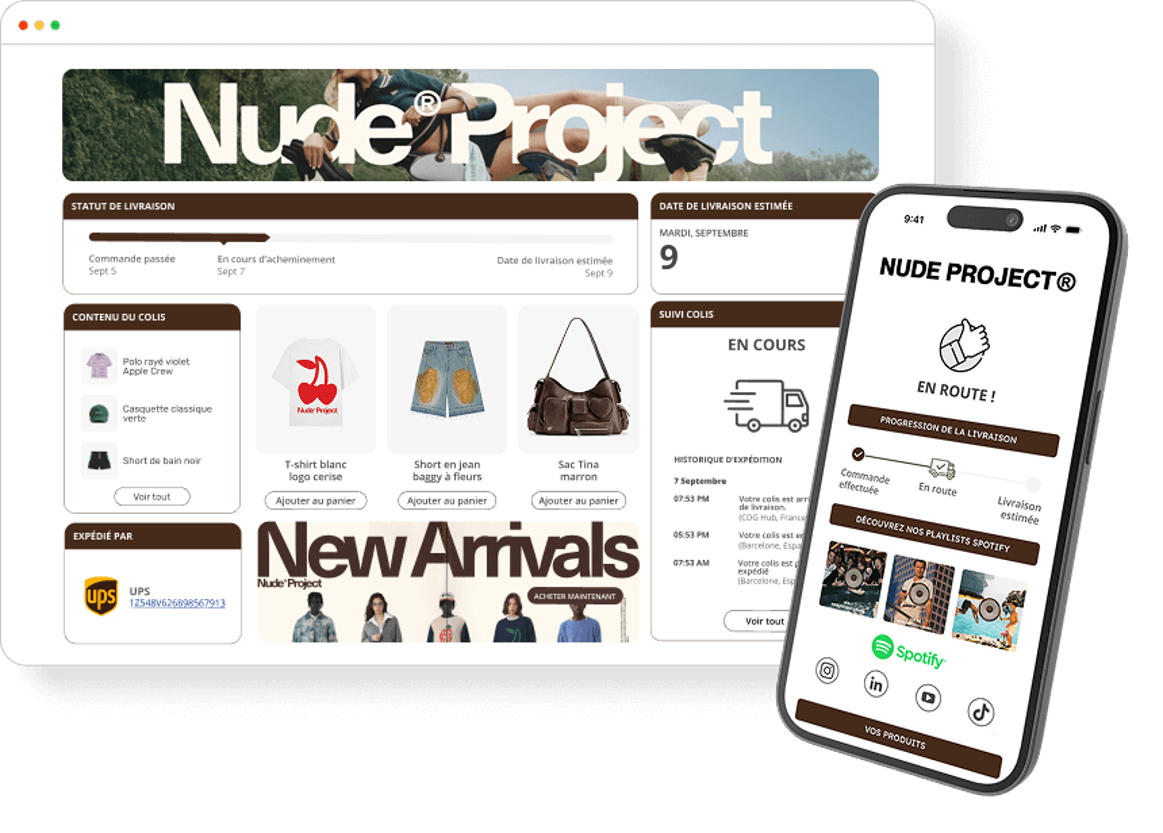
#1: Turn your tracking pages into a sales channel
Your tracking page is the most visited, least monetised page on your entire website.
Customers return to it multiple times per order, they arrive with high intent and attention, and they are already thinking about your brand.
When tracking pages are branded, featuring your logo, your colours, personalised product recommendations, loyalty programme prompts, and review requests, they become high-frequency marketing channels.
For European retailers, branded tracking pages also carry a significant GDPR advantage.
Transactional communications like order confirmations and shipping updates are permitted without explicit marketing consent under the "contract performance" legal basis.
When customers voluntarily visit a branded tracking page on your own domain, product recommendations displayed on that page sit in a more favourable compliance position than embedding marketing content in transactional emails.
This makes branded tracking pages one of the most legally clean marketing channels available to UK and European retailers.
Despite these numbers, WhatsApp remains dramatically underused for post-purchase communication in the UK and European e-commerce.
Most retailers still default to email-only communication after checkout, missing the opportunity to meet customers on the platform they already use dozens of times per day.
WhatsApp is particularly powerful for time-sensitive post-purchase interactions.
Out-for-delivery alerts, delivery exception notifications, and returns initiation all benefit from the immediacy and intimacy of a WhatsApp message.
The channel is also ideal for handling returns directly within the conversation with a platform like ZigZag Global.
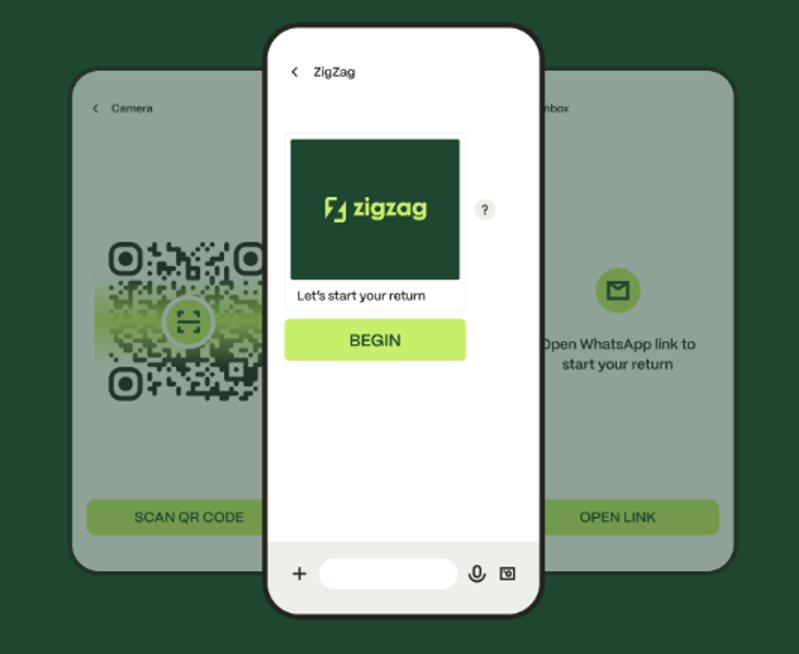
ZigZag's WhatsApp Returns solution brings the entire returns journey into a familiar messaging interface.
Your consumers can initiate returns by scanning a QR code in their parcel, receive their return label directly in the chat, and track the status of their return, all without downloading an app or logging into a portal.
Rather than directing customers to a separate portal, the entire return process, from initiation to label delivery to refund confirmation, can happen inside a WhatsApp chat.
No app downloads, no portal logins, no friction. Just a familiar conversation on a platform the customer already trusts.
#3: Transform returns into a revenue retention channel
This is where the real paradigm shift happens. Returns are not a cost centre. They are the highest-engagement, lowest-competition moment in your entire customer relationship.
A customer initiating a return is actively engaging with your brand, thinking about your products, and is open to alternatives.
The revenue opportunity is enormous. But the data shows that with the right approach, a significant portion of that revenue can be retained.
According to ClickPost, AI-driven return management can convert over 50% of returns into exchanges.
The strategy is straightforward:
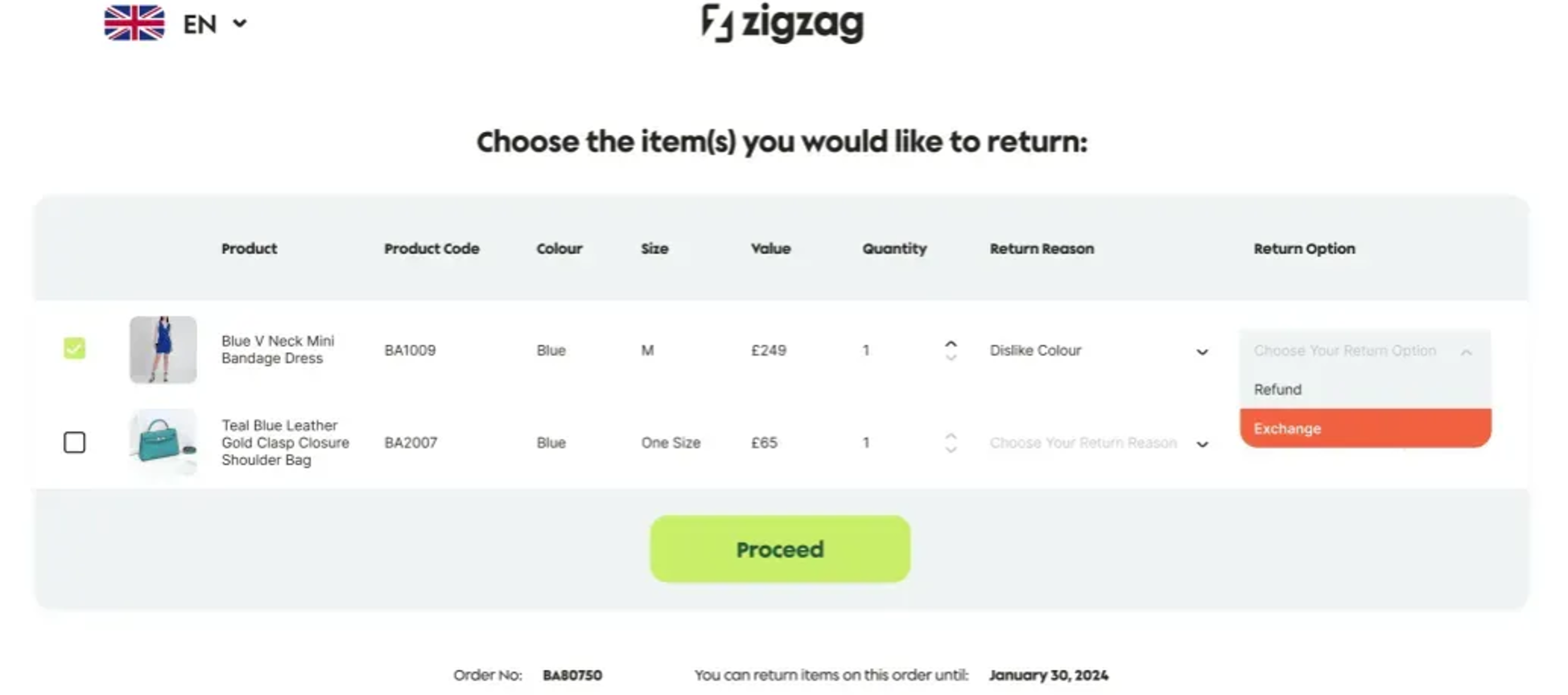
Make exchanges easier and more attractive than refunds.
Offer free return shipping for exchanges, but charge a small fee for refund returns.
Add a 5 to 10% bonus when customers choose store credit over a cash refund.
Use the returns portal to recommend alternative products: a different size, a different colour, or a complementary item that addresses the reason for the return.
#4: Recover hidden revenue with carrier claims automation
There is one more post-purchase revenue opportunity that most retailers overlook entirely: carrier billing errors and unrecovered service failures.
Every late delivery, every incorrect surcharge, and every damaged parcel is money your carrier owes you.
But the complex claims processes and intricate carrier contracts make manual recovery nearly impossible at scale.
Automating carrier claims with a solution like ZigZag can turn a passive cost into active revenue recovery.
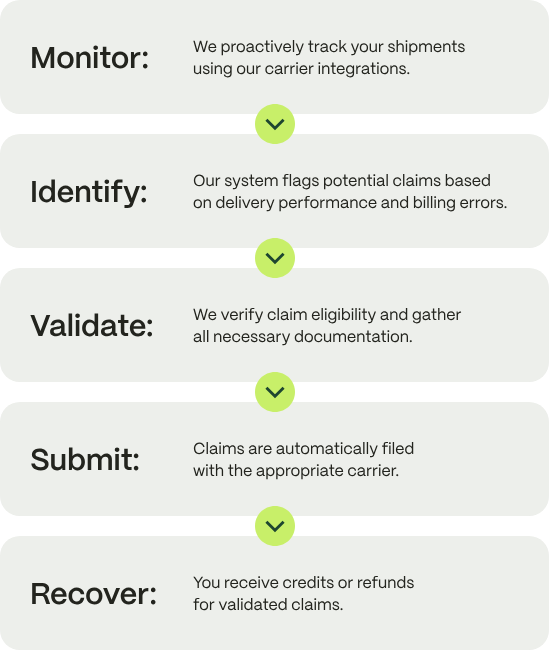
By tracking shipments against carrier service level agreements and automatically filing claims for late deliveries, lost parcels, billing errors, and damaged goods, retailers can recover significant sums that would otherwise disappear into logistics overhead.
ZigZag's Automated Carrier Claims service monitors shipments against carrier service level agreements and automatically files claims for delayed deliveries, billing errors, lost parcels, and damaged goods.
The service runs on a "set it and forget it" model, requiring minimal involvement from your team while maximising recovery rates.
For retailers managing returns across multiple carriers and territories, this automated approach turns what was previously a resource drain into a revenue recovery process.
The recovered funds go directly back to your bottom line, and the improved carrier accountability means fewer delivery failures impacting your customers' post-purchase experience.
Stop losing revenue after checkout
The post-purchase phase in 2026 is not a logistics afterthought.
It is the primary arena where customer loyalty is won or lost, and where some of the highest-ROI revenue opportunities in e-commerce are sitting untapped.
The question is not whether post-purchase upselling works. The question is how much revenue you are leaving on the table by not doing it.
Ready to transform your post-purchase experience?
Book a demo with ZigZag Global to see how our returns portal, WhatsApp Returns, and automated carrier claims can turn your post-purchase touchpoints into revenue.
By clicking “Accept All Cookies”, you agree to the storing of cookies on your device to enhance site navigation, analyze site usage and assist in our marketing efforts. More info
By clicking “Accept All Cookies”, you agree to the storing of cookies on your device to enhance site navigation, analyze site usage and assist in our marketing efforts. More info
.svg)

.svg)
.svg)
.svg)
.svg) Returns
Returns.svg) Returns Solution
Returns Solution Returns Solutions
.svg) Rating (4.8)
Rating (4.8) Reviews400+
.svg)

 Return arrived at ZigZag Returns Hub

 Returning remaining items
.svg) Join our mailing list
Join our mailing list


.svg)





%20(5).svg)

.svg)

.svg)


.svg)
%20(2).svg)
.svg)




.svg)
.svg)
.svg)


.svg)