Smart Delivery Estimates: Are They Worth It In 2026?
In this guide, we’ll go over what smart delivery estimates do, why they matter to UK retailers in 2026, and how smart delivery estimates fit into the wider post-purchase experience.
In this guide, we’ll go over what smart delivery estimates do, why they matter to UK retailers in 2026, and how smart delivery estimates fit into the wider post-purchase experience.
TL;DR
Smart delivery estimates show shoppers an accurate, postcode-specific delivery date on the product page or at checkout, before they buy.
For UK retailers in 2026, vague windows like "3 to 5 working days" are no longer enough to win sales against fast-shipping competitors.
Accurate estimates reduce cart abandonment, cut WISMO contacts, and set the foundation for the rest of the post-purchase journey.
ZigZag's Smart Delivery Estimates use real-time carrier data, warehouse stock levels, and historical performance to give shoppers a date they can trust, then back it up with proactive communication all the way to the door.
What Are Smart Delivery Estimates?
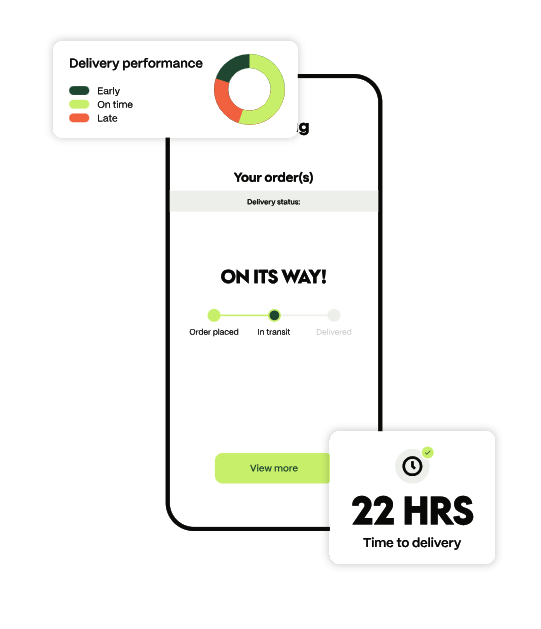
A smart delivery estimate is a calculated, customer-facing delivery date shown before the order is placed.
The old "delivered within 3 to 5 working days" line, the one most shoppers have learned to mistrust, gets replaced by a date built from real data about your warehouses, your carriers, and where the shopper actually lives.
That date also updates dynamically.
A shopper browsing on a Tuesday afternoon, before the 4 PM next-day cut-off, might see "arrives Thursday."
Come back at 6 PM on the same Friday and the same product reads "arrives next Tuesday" because the weekend is now baked in. The responsiveness is the ‘’smart’’ part.
Underneath the widget sit a few inputs:
Stock location and availability.
Carrier cut-off times and working schedules.
Historical carrier performance for the shopper's postcode.
The chosen delivery method.
Any public holidays or known disruption windows.
The output is a delivery date that reflects reality, instead of a guess that falls apart on contact with a real warehouse.
Why Do Smart Delivery Estimates Matter For UK Retailers In 2026?
UK ecommerce shoppers have grown used to fast, named-day delivery.
Amazon Prime, John Lewis, M&S, and ASOS have all helped raise the baseline expectation across categories.
By 2026, "available in stock" is rarely enough information.
Shoppers want to know which day the parcel will arrive, ideally one they can put in their diary, before they commit.
The commercial impact lands in a couple of places.
When a checkout flow only reveals a vague window late in the process, the friction is often enough to push a price-conscious or time-sensitive customer to a competitor.
Showing an accurate, postcode-specific date earlier in the journey closes that uncertainty before it becomes a lost sale.
How Do Smart Delivery Estimates Actually Work?
Three sources of data have to align for the estimate to hold up:
Stock and fulfilment data
Your system needs to know which warehouse holds the item, how many units are available, and what the dispatch cut-off looks like for that location.
Made-to-order items, drop-ship items, and multi-package orders all change the calculation, and the underlying data has to account for them.
Carrier intelligence
Each UK carrier behaves differently. DPD, Royal Mail, Evri, and Yodel each have their own service-level agreements, cut-off times, and regional performance patterns.
A next-day service that performs reliably in central London might be considerably slower in the Scottish Highlands.
A smart estimate should mirror that variation, not flatten it into a national average.
Customer context
The shopper's postcode, the chosen delivery method, and the time of day all shift the answer.
A 3 PM purchase with a 4 PM cut-off is a different problem from a 5 PM purchase made the same afternoon.
The estimate that responds to those small signals is the one shoppers trust.
When the data lines up, the date on the page becomes useful information. Without it, the estimate is a number that happens to be specific.
How Do Smart Delivery Estimates Fit Into A Wider Post-Purchase Experience?
A smart delivery estimate is the opening move in a longer journey.
It sets the expectation, and the rest of the post-purchase communication has to follow through on what was promised, or the estimate goes from an asset to a liability.
This is where connected post-purchase platforms like ZigZag Global (that’s us) come into place.
Once the order is placed, the same data that powered the estimate should feed proactive notifications about dispatch, transit milestones, and final delivery.
If something goes wrong, the customer should hear about it from the brand quickly and clearly, not from a carrier portal or from nowhere at all.
ZigZag handles this end-to-end.
The Smart Delivery Estimate at checkout is the front end of a wider system that covers branded tracking pages, multichannel notifications, and proactive alerts for non-events like missing carrier scans.
Notifications themselves flow across email, SMS, WhatsApp, and Apple Wallet, so the promise made at the product page carries through to the moment the parcel arrives.
How Does ZigZag Approach Smart Delivery Estimates?
Here’s how ZigZag approaches smart delivery estimates:
Real carrier data across every touchpoint
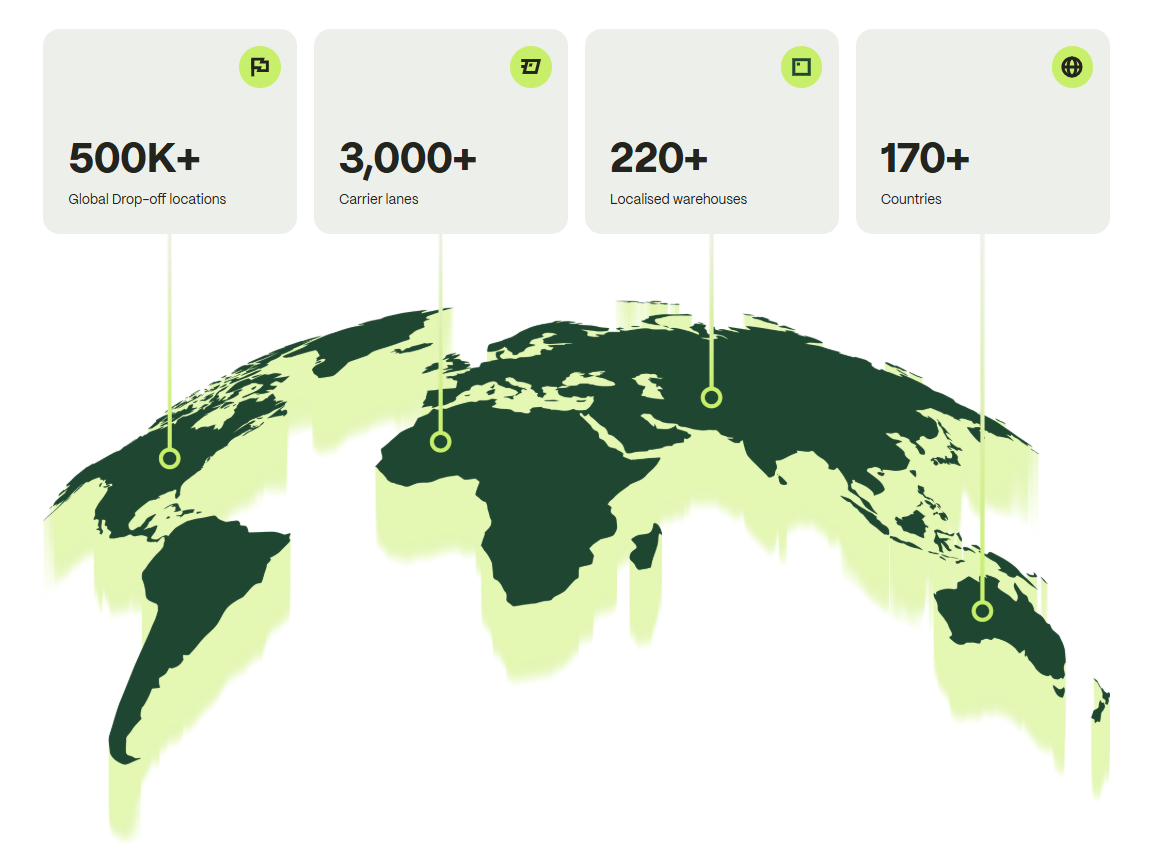
Data from more than 3,000 carrier services across more than 170 countries gets normalised into over 60 standardised event triggers.
The same carrier integrations that power the event layer also feed the delivery estimate at checkout, so the date a shopper sees on the product page comes from the same connected system that will go on to track the parcel through transit.
The estimate stops being a marketing widget and becomes part of a live operation.
Regional accuracy, not national averages
Carriers behave differently across the UK, and national averages rarely tell the right story for any one shopper.
ZigZag draws on carrier-specific and location-aware data, so a shopper in Glasgow doesn't see the same data as a shopper in central London just because the carrier serves both places.
Follow-through, not just a confident number
A solid estimate at the product page collapses if the rest of the journey goes silent.
Once the date is set, ZigZag's notification engine takes over with proactive updates at dispatch, in transit, and on delivery.
If a Smart State alert picks up a non-event, like no carrier scan within a 24 to 36-hour window, ZigZag can message the customer directly or escalate to internal teams before the shopper has to chase.
Brand control all the way through
Carrier tracking pages aren't a great place for customers to land. They're cluttered, sometimes used as a phishing surface, and often carry ads for the carrier's own services.
With ZigZag, the estimate at checkout, the tracking page, and every notification along the way stay inside the retailer's brand.
There's no handoff to a generic third-party screen halfway through the journey.
Built for UK retailers, ready to scale globally
The major UK carriers are covered, including DPD, Royal Mail, Evri, Yodel, and Parcelforce, alongside a global network of more than 1,500 services for cross-border orders.
The AI Translation Manager localises notifications for international customers without piling work onto the content team.
The output isn't a clever widget on a product page.
It's a delivery date anchored in real data, supported through the entire post-purchase journey, and consistent with every message the customer sees afterwards.
So, Are Smart Delivery Estimates Worth It In 2026?
For UK ecommerce retailers competing against fast-shipping marketplaces and well-funded direct-to-consumer brands, the answer is yes, with one important caveat.
A delivery estimate is only as valuable as the system behind it.
A confident date on the product page that gets missed by three days does more damage than a slightly more conservative estimate that lands when promised.
The investment pays back when the estimate is accurate, when it's connected to the wider post-purchase journey, and when the rest of the communication backs it up.
Standalone marketing claims bolted on to a checkout flow rarely move the needle.
For retailers already losing baskets to delivery uncertainty, or for support teams working through WISMO tickets all day, smart delivery estimates are among the highest-impact changes available in 2026.
They sit at the top of the funnel and improve almost every metric downstream, from conversion through to repeat purchase rates.
To see how ZigZag's Smart Delivery Estimate fits into a wider post-purchase experience, book a demo with the team.
By clicking “Accept All Cookies”, you agree to the storing of cookies on your device to enhance site navigation, analyze site usage and assist in our marketing efforts. More info
By clicking “Accept All Cookies”, you agree to the storing of cookies on your device to enhance site navigation, analyze site usage and assist in our marketing efforts. More info
.svg)

.svg)
.svg)
.svg)
.svg) Returns
Returns.svg) Returns Solution
Returns Solution Returns Solutions
.svg) Rating (4.8)
Rating (4.8) Reviews400+
.svg)

 Return arrived at ZigZag Returns Hub

 Returning remaining items
.svg) Join our mailing list
Join our mailing list


.svg)





%20(5).svg)

.svg)

.svg)


.svg)
%20(2).svg)
.svg)





.svg)
.svg)
.svg)


.svg)