The 8 Best Doddle Alternatives For Post-Purchase In 2026
Doddle is a returns and first-mile technology platform that covers click and collect, in-store returns, self-service kiosks and pick-up/drop-off networks through one white-label integration.
Below I've compared eight Doddle alternatives across features, pricing, strengths and limitations.
Best overall: ZigZag Global is the strongest Doddle alternative on this list, pairing its own carrier network of over 1,500 services across more than 170 countries with branded tracking, proactive notifications, and return outcomes designed to keep revenue in the business, not send it straight back out as a cash refund.
Other alternatives by use case: Narvar suits brands that want delivery visibility and post-purchase communication; Happy Returns fits US retailers wanting a box-free return bar network; HubBox and Collect+ work well for UK retailers wanting checkout-level pick-up points; CornerDrop covers smaller independent collection points; Loop Returns and AfterShip Returns fit Shopify-first returns automation.
What Should You Look For In A Doddle Alternative?
The real test for a Doddle alternative is how much of the pick-up, drop-off and returns journey it handles on its own, against how much a retailer would have to build or buy separately to fill the gaps.
Six areas keep coming up once you get past the sales demo.
Carrier coverage and whose accounts you use: A platform either plugs into carrier contracts you already hold, or it brings its own. The second option usually spares your team from negotiating rates market by market and tends to land better pricing on the lower-volume international lanes.
Depth of returns capability: Refunds, exchanges and store credit are the baseline almost every platform offers. What actually recovers cost is what gets layered on top of that: paid returns, free in-store drop-off, consolidation before the item ships back, and rules that decide where it physically ends up.
Physical network reach and kiosk density: Location count on its own means little without knowing where those points actually are relative to your customers, so weigh the network against your own delivery map, not the vendor's total.
Analytics you can act on: A delivery dashboard flags which carriers are falling short. Returns analytics go further, showing which products, sizes and stated reasons are actually driving volume, and that data is the real starting point for bringing the return rate down.
Implementation effort: A one-to-three-month go-live is normal for the enterprise platforms on this list. A Shopify app-store integration can be running the same week it's installed. Get a realistic timeline in writing before you sign anything.
Commercial model: Per-shipment fees, per-return tiers and flat monthly subscriptions scale in very different ways once volume climbs. Run the numbers against next year's projected volume, not this year's, before comparing the prices as advertised.
What Are The Best Doddle Alternatives In 2026 For Post-Purchase?
The best Doddle alternatives in 2026 are ZigZag Global for global returns management, Happy Returns for US return bars, and HubBox for UK pick-up points.
Rounding out the shortlist are Narvar, Collect+, CornerDrop, Loop Returns and AfterShip Returns, each covering a different slice of the post-purchase journey.
Let's go over each one of them:
#1: ZigZag Global
ZigZag Global is a post-purchase and returns management platform that runs the post-purchase journey end to end, from the moment a parcel dispatches through to the refund landing back in a shopper's account, using a carrier network it operates directly across more than 170 countries.
Doddle's post-purchase story starts at click and collect and the physical store. ZigZag Global's starts on the reverse leg, in the return itself, and builds outward from there.
For a retailer watching margin disappear after the parcel has already arrived, that's the starting point that actually matters.
Note: ZigZag Global is our own platform, so we have aimed to describe what we do without overstating it, and we have been specific about where other tools on this list are a better fit.
Here's what a retailer gets:
Carrier network: More than 1,500 carrier services and 220 localised warehouses, run under ZigZag's own accounts, not yours, so there's no separate carrier contract to negotiate market by market.
Revenue-protecting return outcomes: Gift cards, store credit, paid returns and free in-store drop-off, each one an alternative to a straight cash refund.
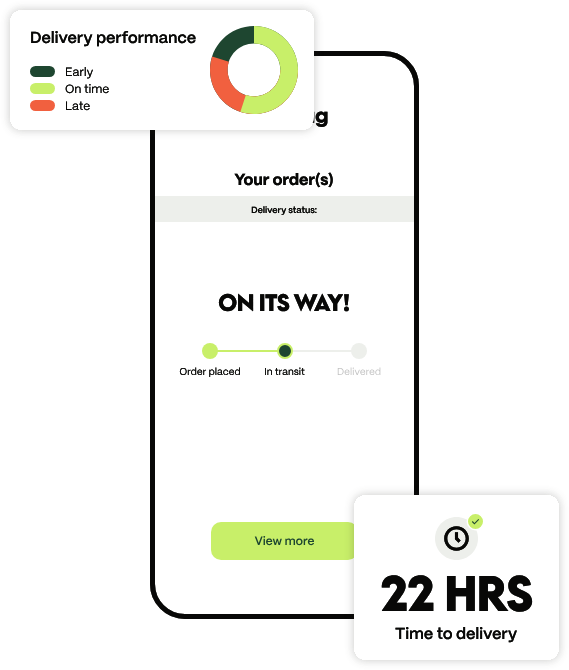
Branded tracking and notifications: Powered by carrier data normalised into one shared event language, spanning more than 60 standardised triggers.
Returns analytics: Shows why items come back, flags returning behaviour worth a second look, and points out where the operational friction actually is.
Dedicated account management: From the first onboarding call onward.
Here's what the platform covers in more detail:
Branded Tracking And Proactive Notifications
The tracking page is hosted on your own domain, not a carrier's, which keeps the shopper on your site during the highest-traffic window of the order and away from the phishing pages that carrier tracking links sometimes attract.
Every carrier's raw tracking events get normalised into one shared event language behind that page, so a Royal Mail delay reads exactly the same as a DPD delay or an Evri one.
Most orders generate somewhere between three and five notifications from that event feed, with extra messages only kicking in for cross-border shipments or genuine incidents.
Email handles the routine updates. SMS and WhatsApp are held back for moments that actually need urgency, a pickup point reminder being the clearest example, and if the first channel doesn't land, fallback logic tries the next one.
Multilingual And Customisable Returns Portal
The returns portal carries your branding throughout and changes its own logic depending on why a shopper is returning something. Select faulty, and the portal can route that differently from didn't fit, without any manual intervention on your end.
International retailers get multiple currencies and languages inside the same portal, and copy only needs writing once.
The AI Translation Manager takes that master copy and produces every activated language automatically, so there's no separate localisation project to run.
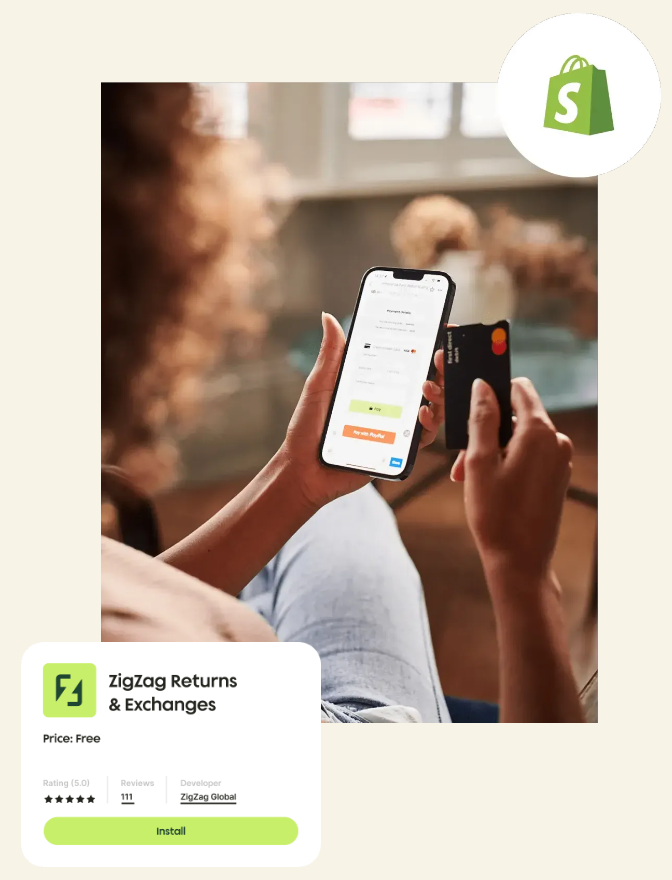
Single-Click Shopify Integration
Shopify installation is one click, which is about as light an implementation as enterprise-grade returns infrastructure gets. That single click gets a merchant:
Shopify merchants use the integration to:
A working returns flow immediately: No development sprint required to go live.
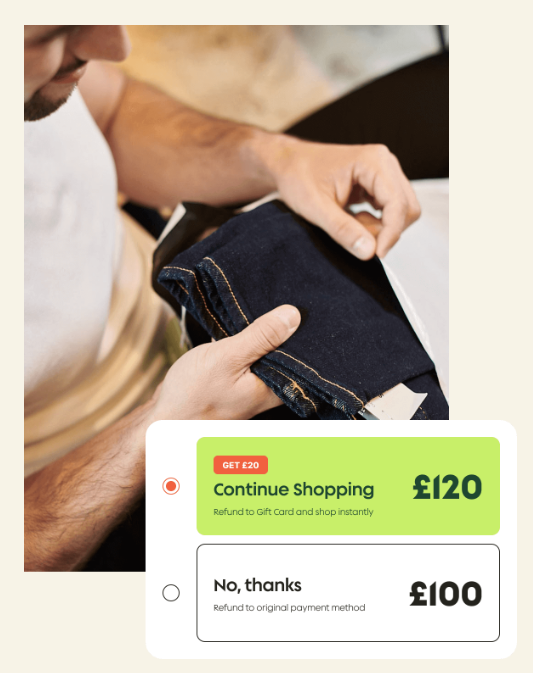
A nudge towards exchanges first: Shoppers see exchange and gift card options before a cash refund is offered.
Lower return costs: Consolidation and efficient routing can cut return expenses by up to 57%.
That 57% figure isn't a coincidence.
Our own consumer research found that's the share of shoppers who, mid-refund, would take a gift card if one were actually offered, revenue most retailers currently leave unclaimed.
Return Options That Keep Revenue In The Business
Every return ends somewhere, and where it ends changes how much of that money stays with the retailer.
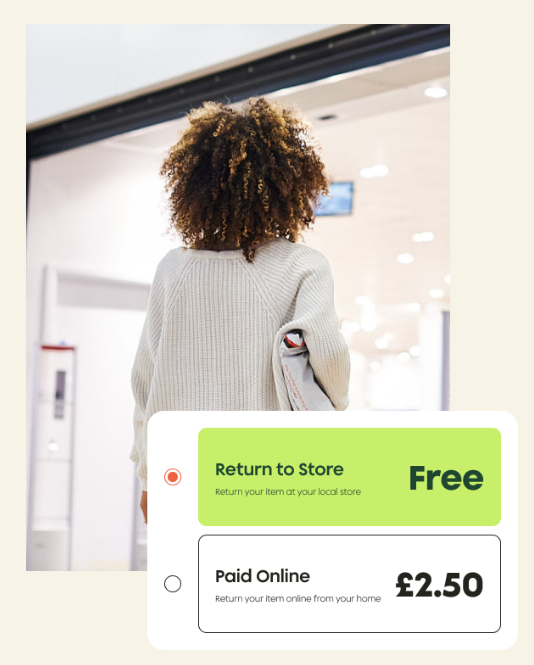
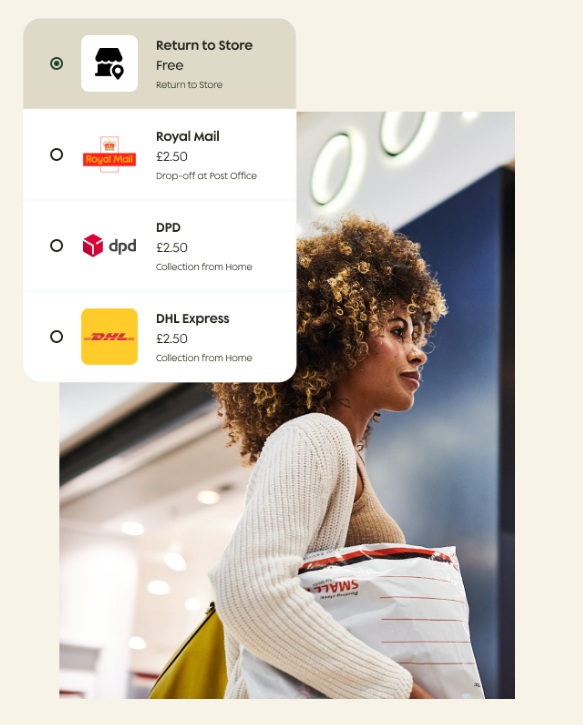
In-store returns let a shopper hand the item back in person, cutting the reverse shipping cost to nothing and bringing them into the store. For retailers who'd rather not tie up shop floor staff, self-service in-store kiosks do the same job unattended.
Store credit turns the refund into a gift card against your own store. Shoppers take it more often than you'd expect, largely because the credit tends to be worth more than the cash equivalent would have been, and the capital stays with you.
Paid returns work differently again: the shopper covers a small fee to send the item back. Our own research puts the share of shoppers willing to do that at 48%, and paid returns overall are up 32% on last year.
That fee offsets the reverse shipping cost, makes wardrobing less appealing, and tends to make shoppers think harder before they buy in the first place.
💡 ZigZag Global also offers in-store drop-off kiosks for companies that are hassle-free for your shoppers.
Advanced Returns Analytics
One dashboard tracks every return, so patterns show up while they're still fixable rather than after they've become permanent.
That dashboard shows:
Refund outcome mix: Which refund outcomes shoppers choose most often.
Return reasons: The most common reasons behind returns.
Paid returns revenue: Revenue generated from paid returns.
Fraud signals: Suspicious returning behaviour at customer level.
Retailers tend to see their return volume fall over time once that reason data starts feeding into sizing charts, product photography and copy.
ZigZag Global Pros And Cons
✅ More than 1,500 carrier services and over 500,000 drop-off locations, all under ZigZag's own carrier accounts.
✅ Return reason data and fraud signals from a dedicated analytics dashboard.
✅ Store credit, paid returns, gift cards and in-store drop-off all recover cost that a straight refund wouldn't.
✅ Branded tracking, Smart States and multichannel notifications running on the same platform as the returns themselves.
✅ A multi-currency, multi-language portal installable on Shopify in one click.
❌ Pricing is quote-based, so there's a sales call before you see a number.
#2: Narvar
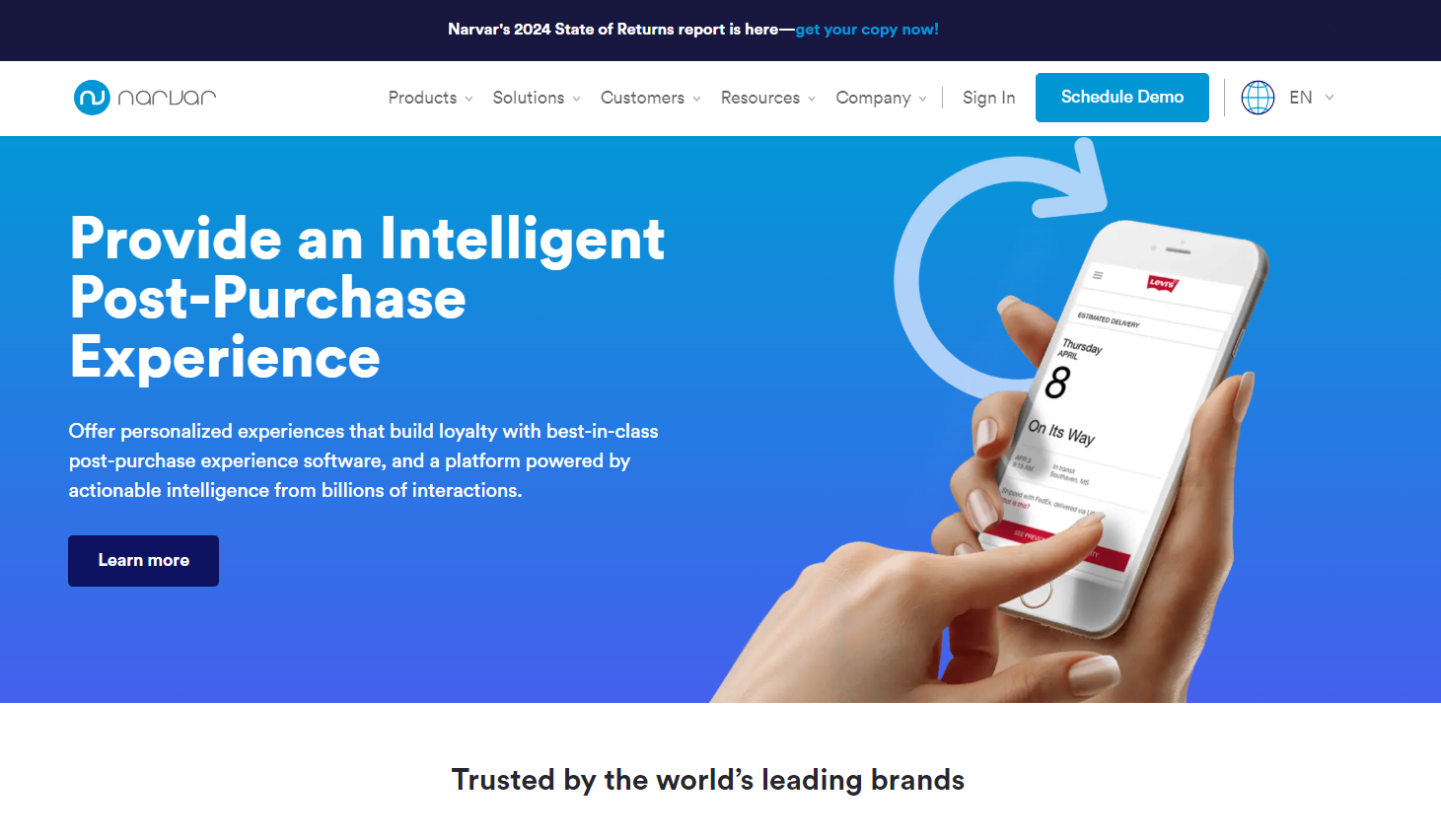
Narvar's product leans toward the shopper-facing side of post-purchase: clear delivery timing up front, then full visibility once something needs to go back.
Retailers weighing up Doddle alternatives mainly for the cost of returns tend to be drawn to Narvar's routing logic specifically, since it decides where a returned item travels next to recover the most value.
Features
Choice of return method: Shoppers pick between home collection, an in-store drop-off or a third-party point.
Fees tied to the reason: A retailer can waive the shipping charge specifically when its own warehouse sent the wrong item.
Value-recovery routing: The platform decides where a returned item goes next based on where it will resell fastest.
Fraud signals across the network: Return patterns get compared across Narvar's whole retailer base, not just one store.
Pricing
Narvar doesn't list pricing publicly. A number only comes after a conversation with their sales team, and it depends on order volume and how many markets you're covering.
➡️ But we’ve got the numbers: In our in-depth Narvar pricing guide, we found how much the platform really costs after consulting with insiders.
Pros And Cons
✅ Return rules mature enough to get value back from returned stock quickly.
✅ Network-wide data makes fraud easier to catch, especially at higher volumes.
✅ The returns portal can be branded from top to bottom.
❌ It takes 60-90 days for full implementation and integration of the Narvar software, which is why some merchants have been looking for Narvar alternatives.
#3: Happy Returns
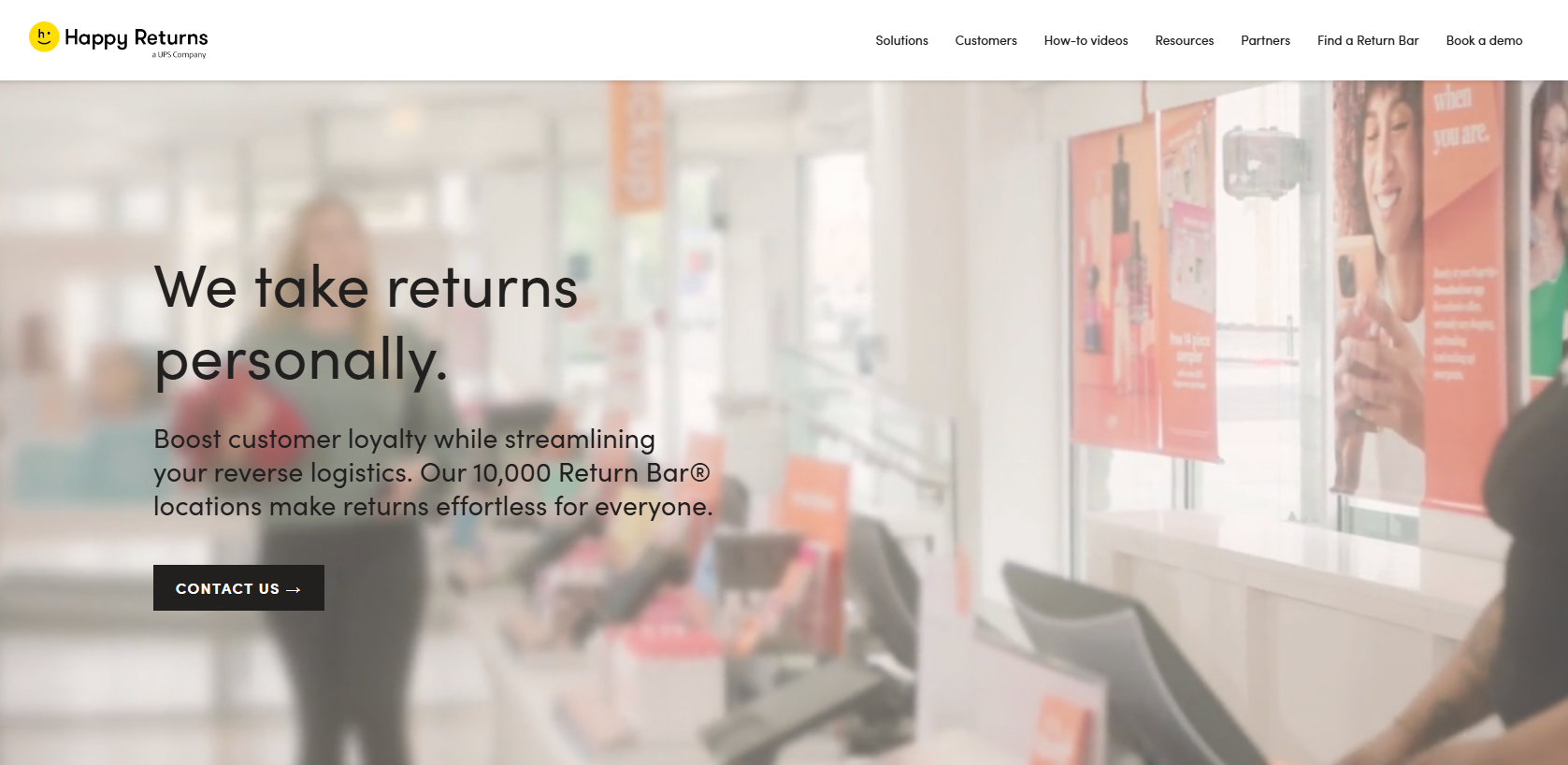
Happy Returns, owned by UPS, gives shoppers a box-free, label-free way to return items across more than 10,000 Return Bar locations in the United States.
Retailers who miss Doddle's kiosk experience most tend to look at Happy Returns first.
Features
Box-free, label-free drop-off: Items scanned and checked against the order in front of the shopper.
First-scan refunds: Triggered ahead of the item reaching a warehouse.
Three processing hubs: In Van Nuys, California, Shoemakersville, Pennsylvania, and Southaven, Mississippi, where returns from multiple retailers are consolidated.
Per-item billing: Cost tracks return volume, not order count.
Pricing
There's no published price for Happy Returns. A quote depends on expected return volume and the typical size of the items being returned.
Pros And Cons
✅ Box-free and label-free drop-off, closely matching Doddle's own kiosk experience.
✅ Verification at the counter gives retailers confidence to refund on first scan.
✅ Backed by UPS's own retail and delivery network.
❌ Coverage is limited to the United States, and a 200-item monthly minimum rules out very small retailers.
#4: HubBox
HubBox doesn't operate pick-up points itself.
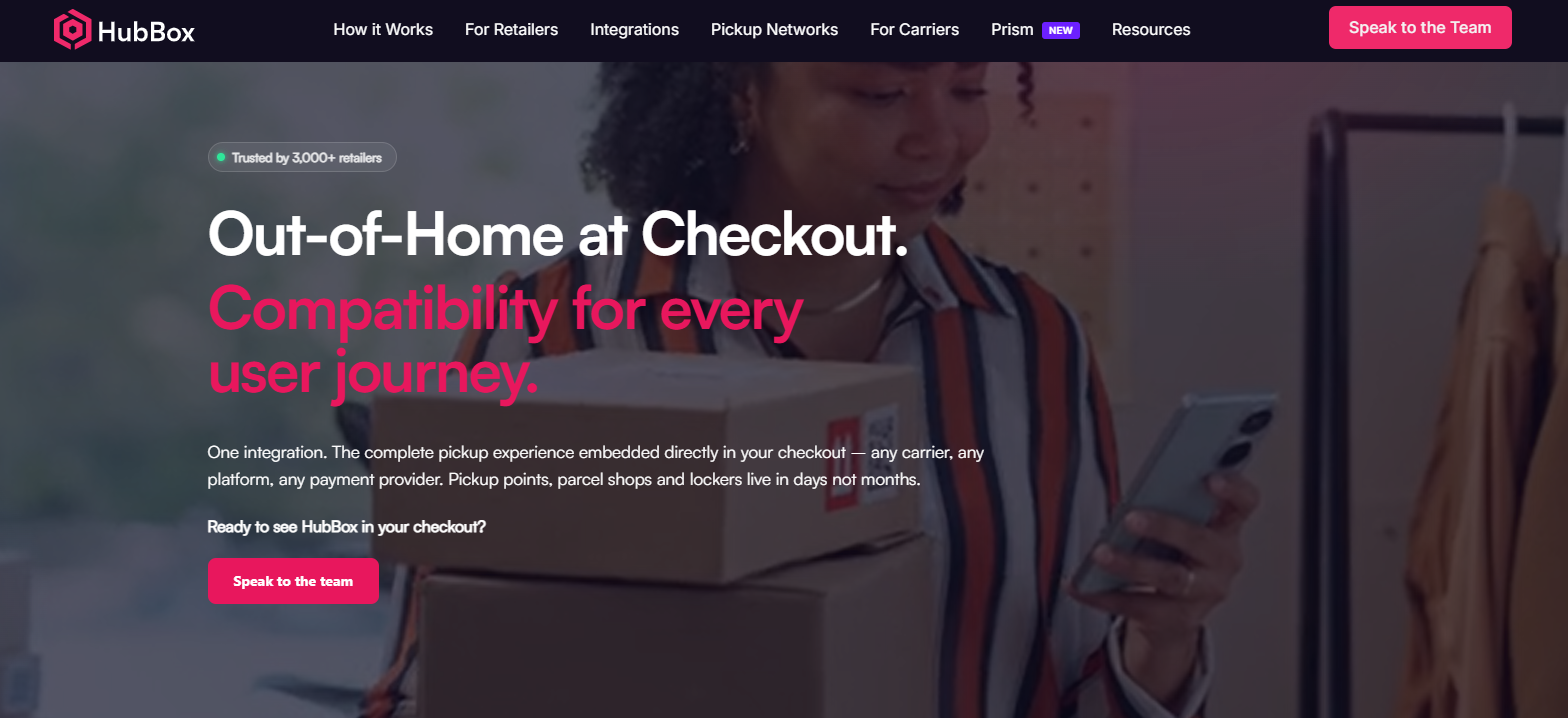
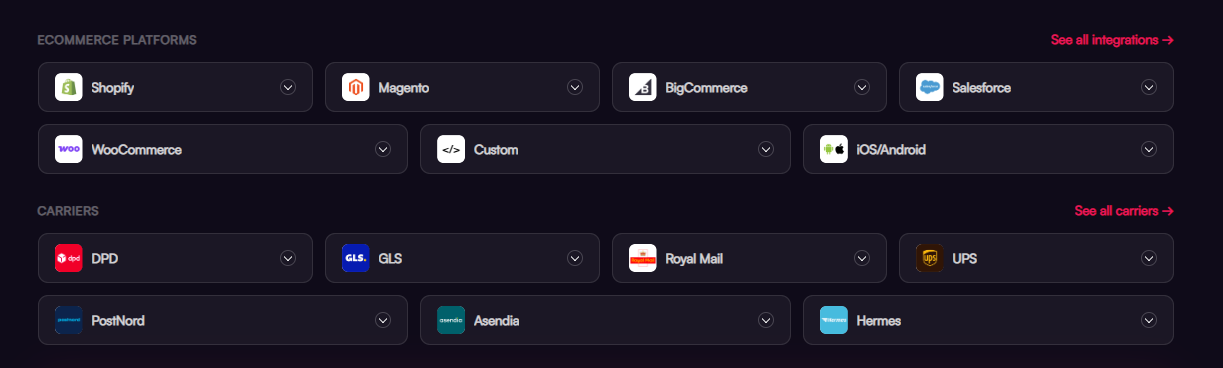
The UK-founded company builds checkout software that connects a retailer's site to pick-up point and locker networks run by carriers such as DPD, UPS, PostNord, Asendia and Hermes.
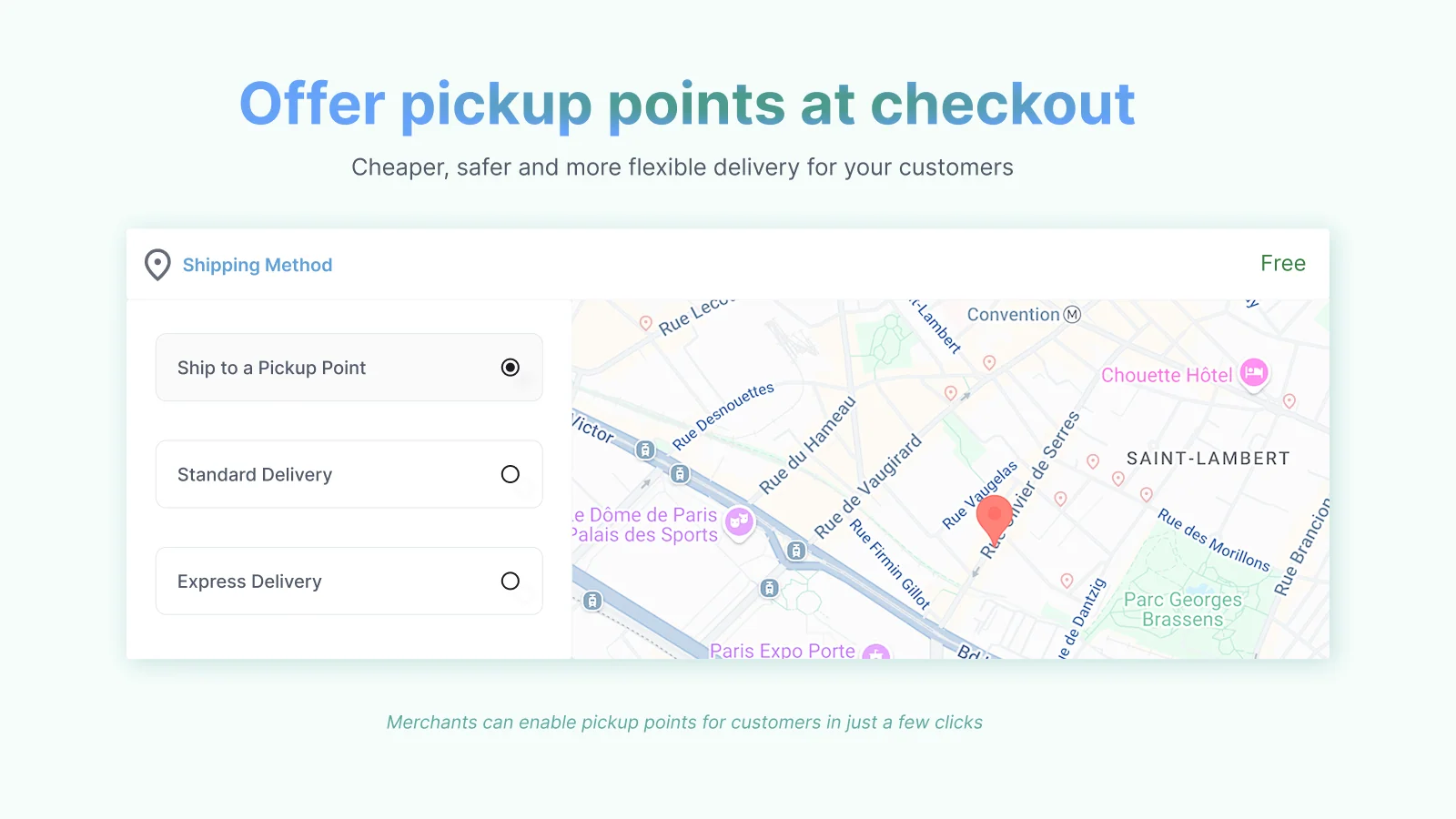
The fit here is a retailer that wants to keep its existing checkout and simply add pick-up points on top.
Features
Checkout-level integration: A ready-made plugin, JavaScript SDK or Google Tag Manager tag, with no rebuild of the checkout required.
Multi-carrier connections: To several carrier networks at once, including Collect+, DPD and UPS.
Retailer base: More than 3,000 names, including Macy's, J.Crew and Gap.
Carrier-subsidised onboarding: Several partners cover an eligible retailer's first year.
Pricing
There is no fixed price list. Cost depends on which carrier networks are connected, and the first year is often subsidised by a carrier partner.
Pros And Cons
✅ Connects to several carrier networks at once, so coverage isn't tied to a single carrier.
✅ Retailers keep their existing checkout, with pick-up options layered on top.
✅ Carrier-funded onboarding can offset the first year's cost.
❌ No physical locations of its own, so coverage is only as good as the carrier networks a retailer connects.
#5: Collect+
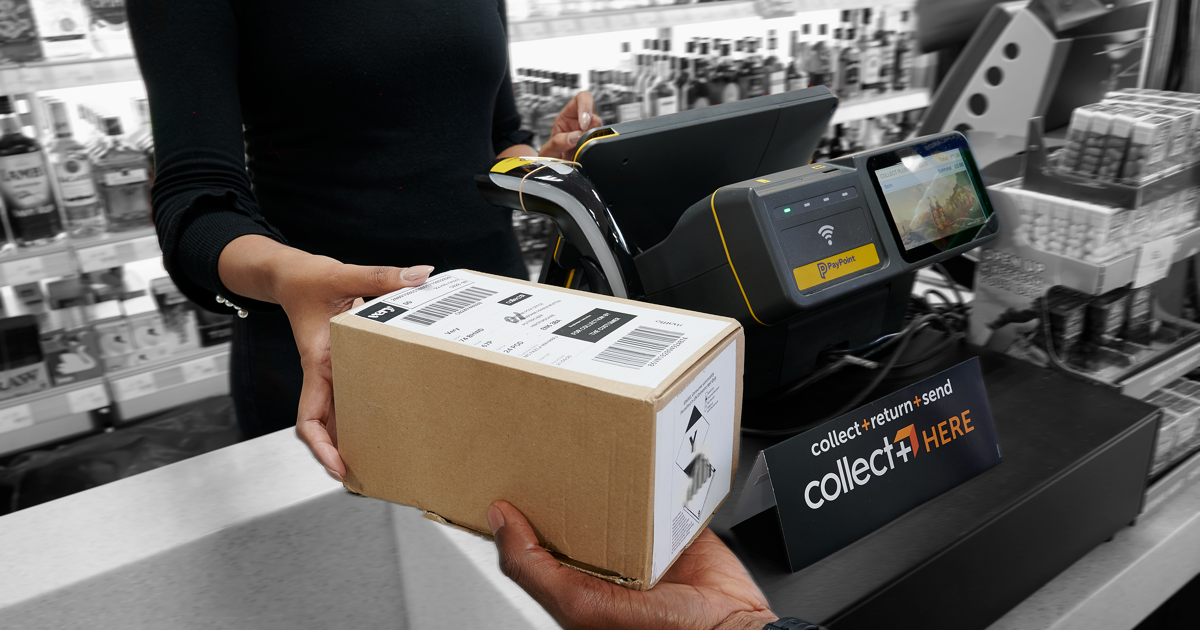
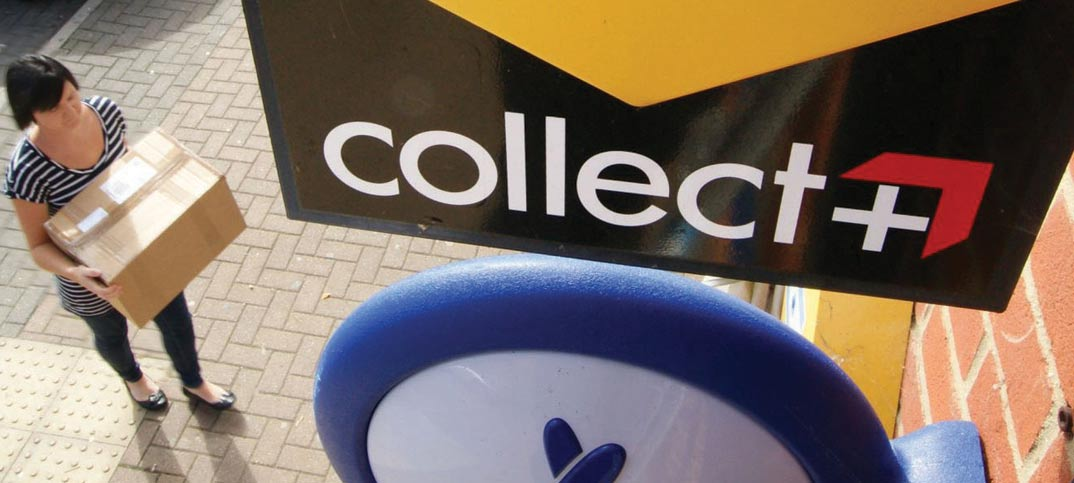
Collect+, run by PayPoint, is the biggest pick-up and drop-off network in the UK by location count, spread across more than 14,000 sites.
Retailers chasing the widest possible UK footprint will find Collect+ hard to match on raw coverage.
Features
Network size: More than 14,000 convenience stores, newsagents and supermarkets acting as collection points.
Royal Mail Shop rebrand: Underway since Royal Mail's parent company, International Distribution Services, took a 49% stake in the business in September 2025.
Self-service kiosks: Extended in-store postage services rolling out through 2026.
Access model: Arranged through a carrier or PayPoint contract, using the StoreScan app already installed at participating stores.
Pricing
Collect+ isn't sold as a standalone software subscription. Access is arranged through a carrier contract or a direct commercial agreement with PayPoint.
Pros And Cons
✅ The largest single PUDO network on this list by location count.
✅ Extended opening hours at many sites, including evenings and weekends.
✅ Self-service kiosks and Royal Mail's own postage services are being added through 2026.
❌ The ongoing rebrand means service and branding can vary from one location to the next.
#6: CornerDrop
CornerDrop turns local shops into pick-up and drop-off points, letting any florist, hairdresser or newsagent register as a collection point for online orders.
Merchants pick CornerDrop when the nearest carrier locker is nowhere near where their customers actually are.
Features
Open network model: Any small business can apply to become a drop-off point, widening coverage beyond the major carrier networks.
Collection codes: A four-digit code sent to the shopper once the parcel arrives at the chosen location.
Analytics: Usage and performance data at individual pick-up points.
Free trial: Available for retailers evaluating the platform before committing.
Pricing
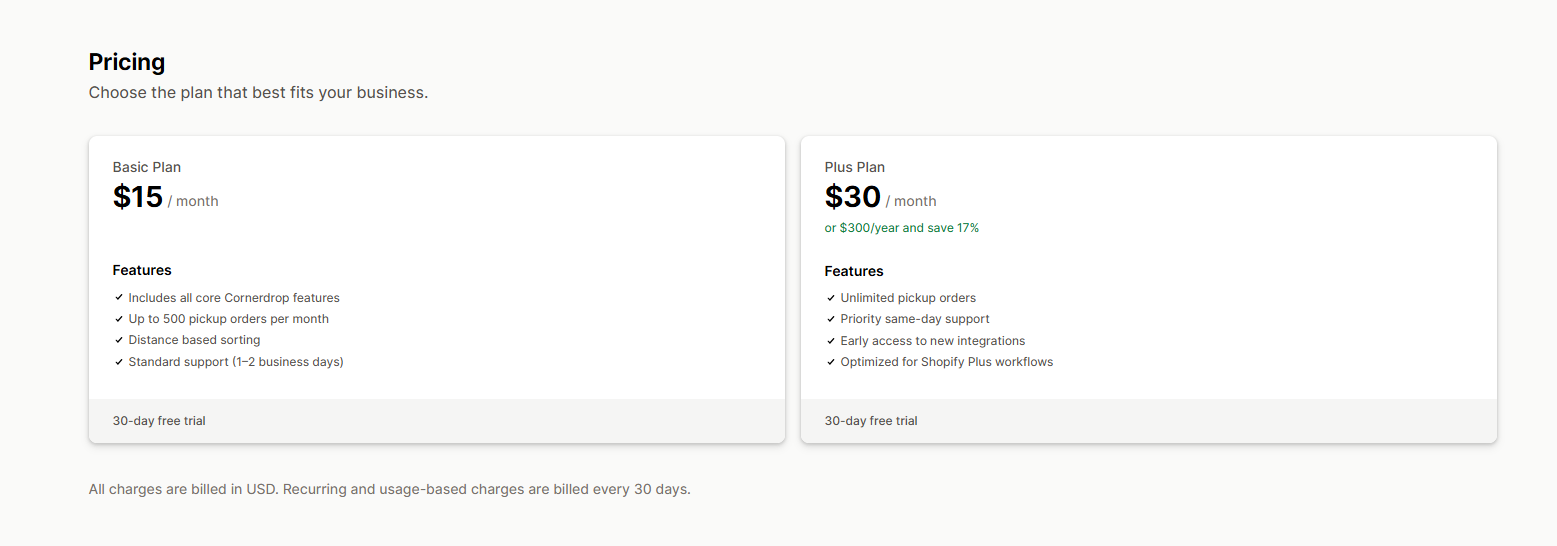
CornerDrop has 2 paid plans that you can choose from in its Shopify page:
Basic Plan: $15/month, which includes all core CornerDrop features, and up to 500 pickup orders per month.
Plus Plan: $30/month, which adds unlimited pickup orders, and priority same-day support.
Pros And Cons
✅ Coverage can extend into areas without a dedicated carrier locker or major retail chain.
✅ Detailed analytics on individual pick-up point performance.
✅ A free trial is available before committing.
❌ The network is considerably smaller than PayPoint's or HubBox's carrier connections, and current focus has shifted to Canada, so UK coverage needs confirming before you rely on it.
#7: Loop Returns
Loop Returns is a Shopify-native returns platform built around exchanges, with a branded portal and workflow automation that lets retailers steer refunds towards revenue-retaining outcomes.
Retailers moving away from Doddle purely for returns, and running on Shopify, will find Loop Returns the quickest of these platforms to evaluate.
Features
No-contact returns portal: Shoppers start a return or an exchange without emailing support first.
Return Bar drop-off: Included on the free Checkout+ plan for merchants processing more than 10,000 orders a year.
Instant Exchange: Ships a replacement before the original item is scanned back in.
Fraud prevention: Flags patterns associated with wardrobing.
Pricing
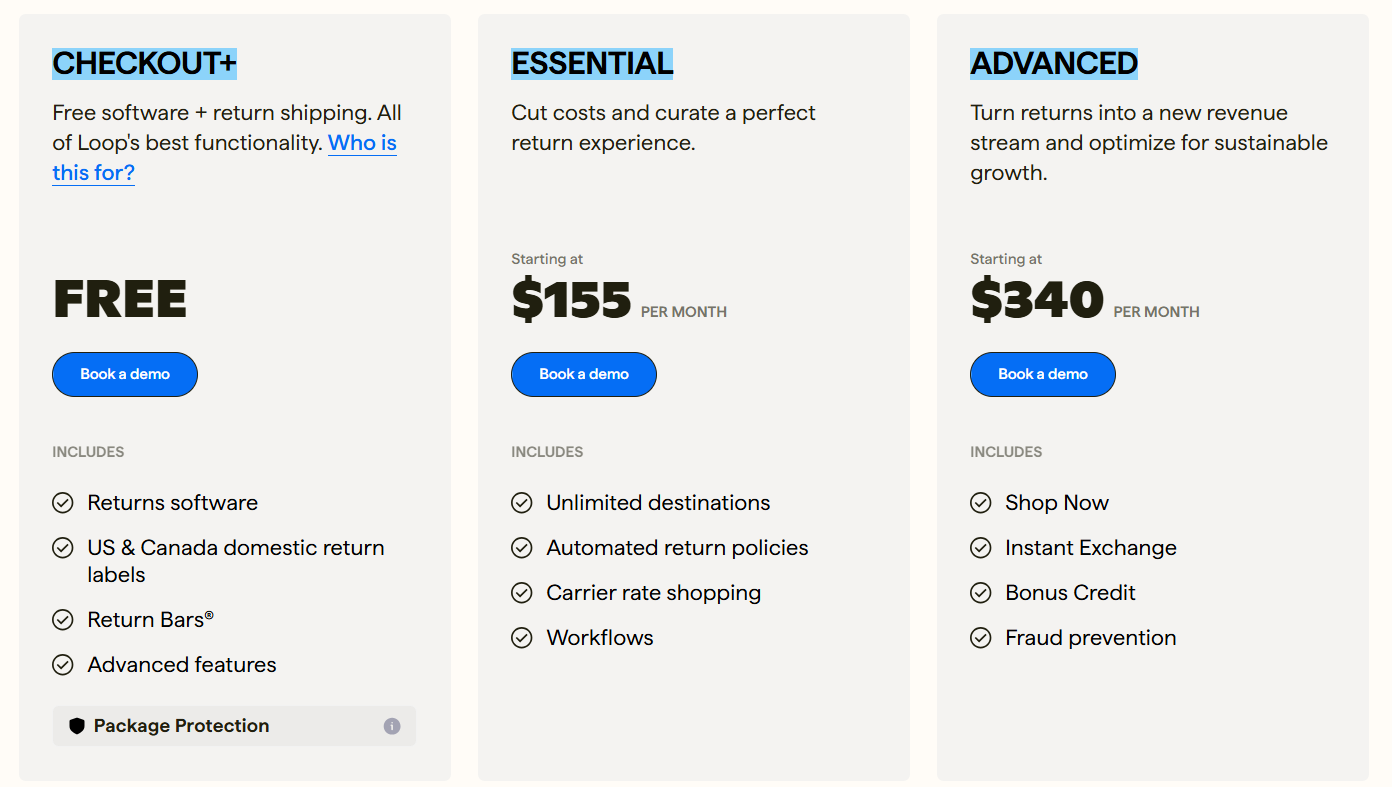
Loop Returns publishes three tiers based on features and return volume.
Checkout+: Includes returns software, US & Canada domestic return labels, and its Return Bars®.
Essential: $155 per month, with unlimited destinations, automated return policies, workflows and carrier rate shopping.
Advanced: $340 per month, adding Shop Now, Instant Exchanges, Bonus Credit and fraud prevention.
Pros And Cons
✅ Published pricing, unlike most other alternatives on this list.
✅ Free tier available for high-volume merchants.
✅ Fraud prevention and exchange tools built into the higher tiers.
❌ The setup of the platform can allegedly take a while, which is why some retailers have been looking for Loop alternatives.
#8: AfterShip Returns
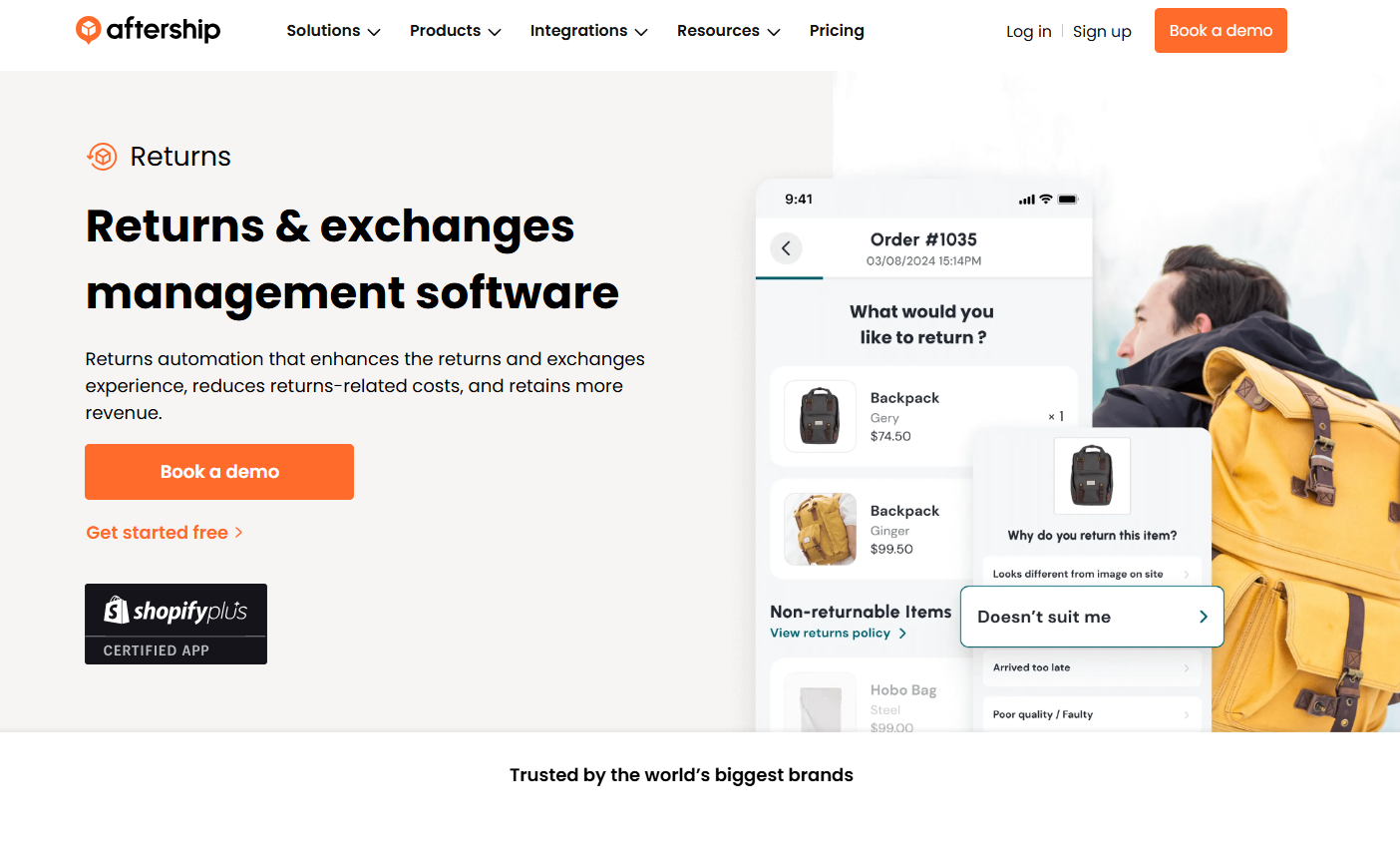
AfterShip Returns automates return eligibility and approvals through a set of configurable rules, cutting the manual review a retailer would otherwise face as volume grows.
Where Doddle bundles its returns technology inside a much larger supply chain suite, AfterShip Returns keeps things scoped to eligibility rules and approvals.
Features
Branded returns flow: Carries the retailer's own logo, colours and return policy.
Refunds and exchanges: To the original payment method, or exchanges for a different size, colour or product.
Eligibility rules: Based on price, category, condition or days since purchase.
Warehouse routing: Each return automatically routed based on origin, SKU or destination.
Pricing
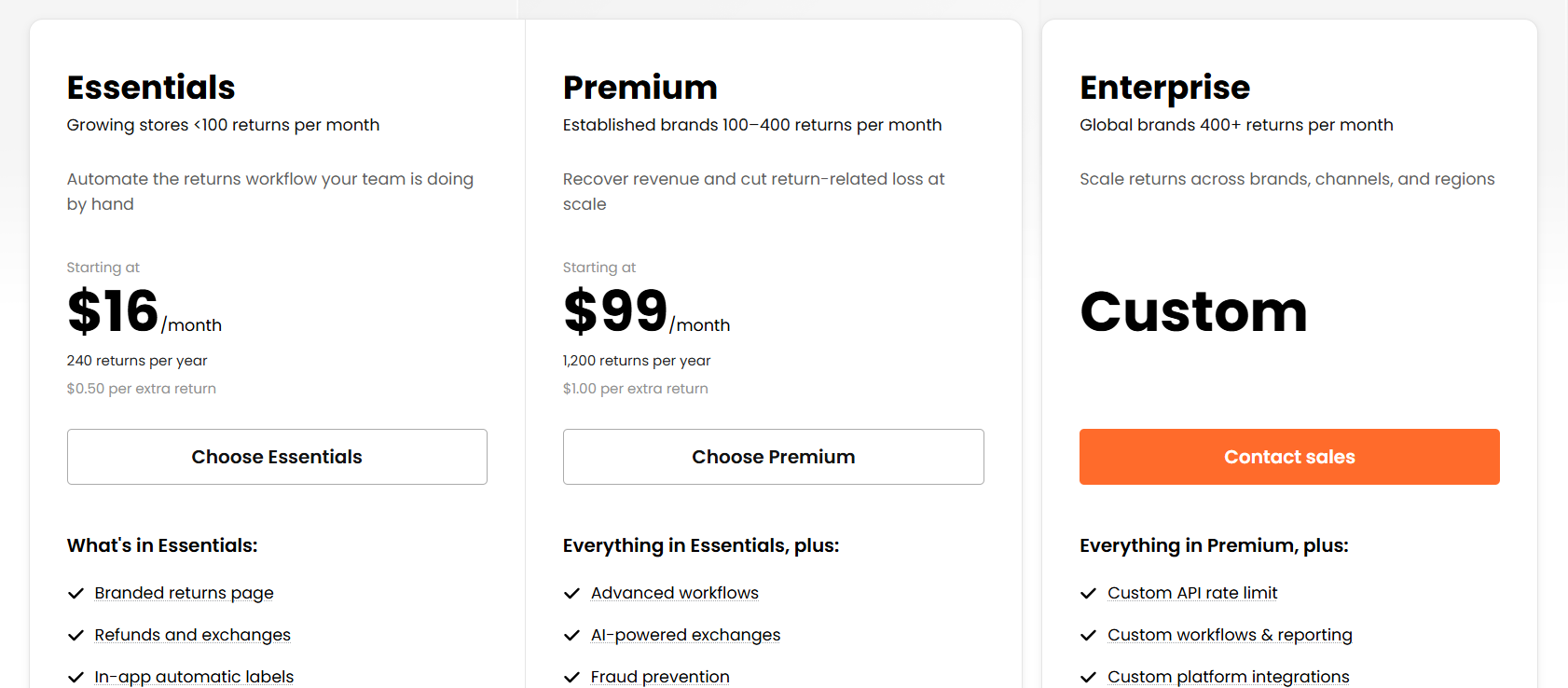
AfterShip prices in three tiers based on expected annual return volume.
Essentials: from $16 per month for stores under 100 returns a month, with a customisable returns portal.
Premium: $99 per month for 100 to 400 returns a month, adding fraud prevention and revenue recovery tools.
Enterprise: custom pricing above that. The tracking product is billed separately if you want both.
Pros And Cons
✅ Published entry-level pricing starting under $20 a month.
✅ Automated eligibility rules reduce manual review of return requests.
✅ Warehouse routing works automatically based on origin, SKU or destination.
❌ Not as easy to set up and use, which is why some retailers have been looking for alternatives to AfterShip.
Next Steps: Bring Returns And Post-Purchase Into One Platform
As part of Blue Yonder, Doddle does its job well for a large retailer already committed to Blue Yonder's warehouse and order management stack, where click and collect and in-store returns are one piece of a much bigger supply chain build.
A retailer that just wants the returns and post-purchase side, on its own contract, without adopting that whole supply chain suite, is usually better served elsewhere on this list. Bringing a returned parcel home costs money, and what drives that cost is physical: carrier accounts in every market you sell into, somewhere to consolidate volume, enough drop-off density, and rules that decide where each item actually goes next.
ZigZag Global handles the outbound side too.
Branded tracking, Smart States, notifications across every channel, so the same platform sends a parcel out and, if it comes back, brings it home with store credit, a paid-return fee or a free in-store drop-off already built in.
If you want to reduce return costs, recover more revenue at the point of return and run international returns without stitching regional tools together, book a demo and we'll walk you through it with your own numbers.
By clicking “Accept All Cookies”, you agree to the storing of cookies on your device to enhance site navigation, analyze site usage and assist in our marketing efforts. More info
By clicking “Accept All Cookies”, you agree to the storing of cookies on your device to enhance site navigation, analyze site usage and assist in our marketing efforts. More info


 Returns
 Returns Solution
 Returns Solutions

 Rating (4.8)
 Reviews400+


 Return arrived at ZigZag Returns Hub


 Returning remaining items
 Join our mailing list