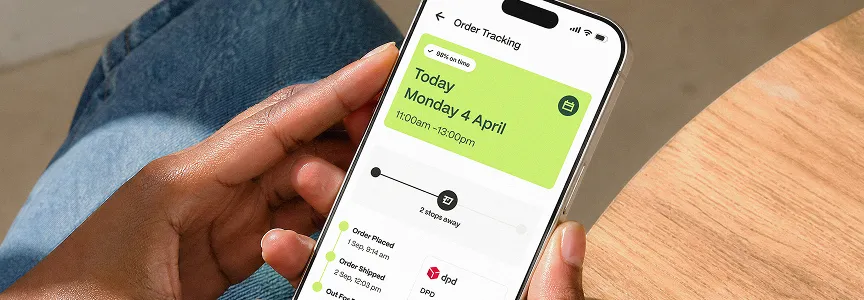
E-commerce platforms continue to invest heavily in acquiring new customers. Today, the average cost of acquiring a customer for e-commerce is a staggering $78 . Customer acquisition costs have increased by 60% over the past five years, with brands losing a record $29 for each new customer acquired.
The solution to this challenge? The post-purchase phase. From order to delivery and beyond, e-commerce leaders, from Courir to Carrefour, have seized upon the pivotal post-purchase stage as a key opportunity to increase customer loyalty and, consequently, revenue. Retaining existing customers is up to 5 to 7 times more profitable than acquiring new ones. However, to truly reap the rewards of the post-purchase phase, e-commerce brands must ensure they offer an omnichannel experience throughout delivery and beyond.
An omnichannel customer experience for online delivery involves offering a seamless, consistent, and integrated delivery experience across all customer touchpoints, whether via email, SMS, WhatsApp, or Apple Wallet Order Tracking. It ensures that customers receive timely, personalised delivery information and support, regardless of how they interact with your e-commerce brand, thereby increasing their satisfaction and loyalty.
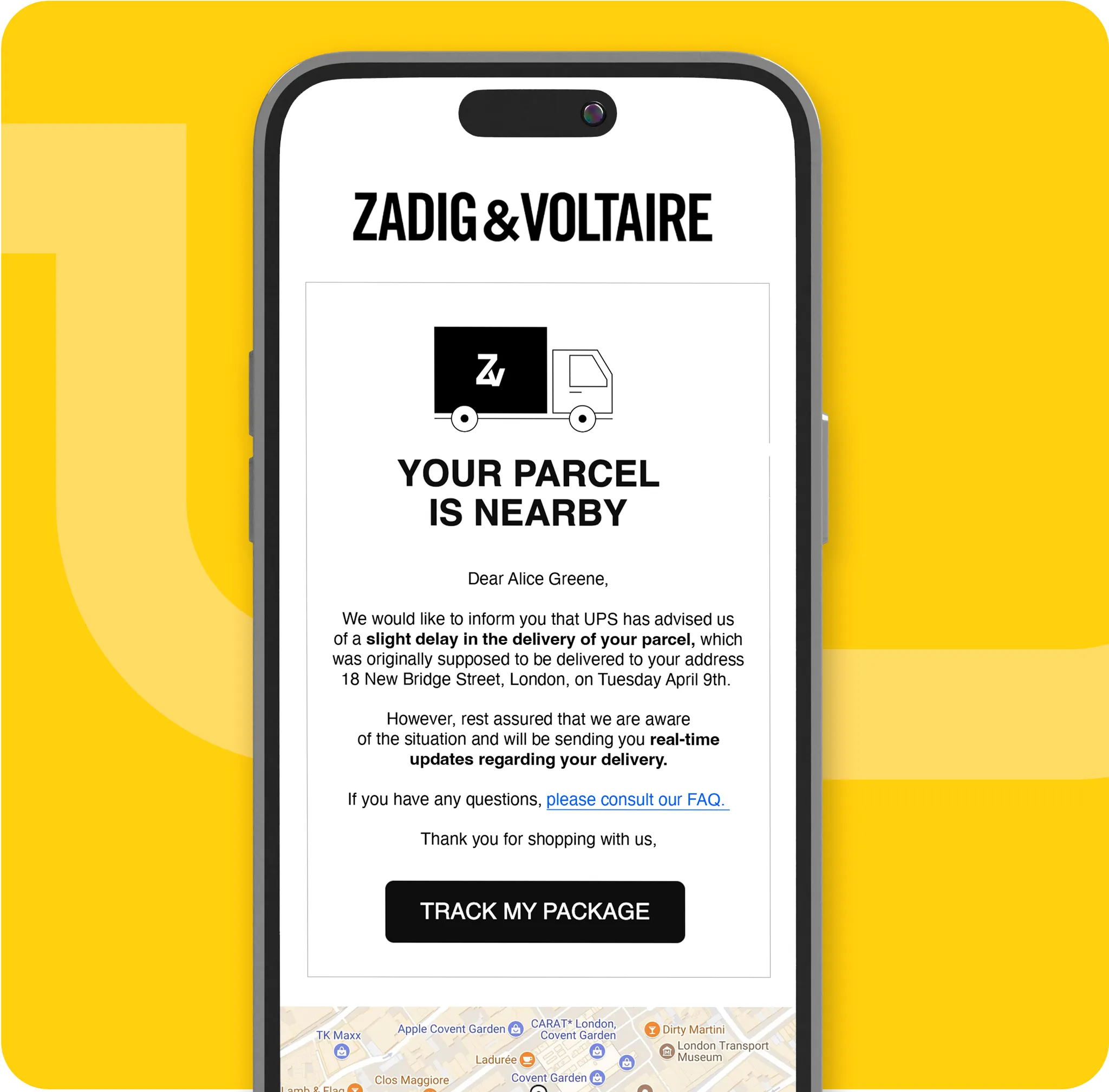
In terms of engagement, post-purchase communication far surpasses traditional pre-purchase emails. As shoppers eagerly await their orders, post-purchase emails boast an average open rate of 61.68%, nearly twice that of pre-purchase e-commerce emails, which currently stand at 31.08%.
Average open rate
Example: open rate after purchase of e-commerce brands
But the omnichannel experience is about offering a seamless experience across all channels, not just email. And since French shoppers receive an average of 30 emails a day, it's not surprising that some of them turn to less frequented channels to receive post-purchase notifications.
Post-purchase notifications via WhatsApp have a 98% open rate. Post-purchase notifications via SMS also have a 98% open rate. It is no surprise, then, that they have become a key channel for post-purchase communication. Used by 63.7% of the French population, with 80% of WhatsApp messages read within the first five minutes of receipt, the messaging app is a high-engagement channel that allows customers to receive real-time, personalised updates on their orders while chatting with friends. Another major advantage: WhatsApp has much less commercial noise, meaning these delivery updates will not get lost in spam or drowned out by email marketing.
What is the average open rate for order tracking via Apple Wallet?
Apple Wallet Order Tracking notifications have a 100% open rate. Order tracking via Apple Wallet has also established itself as a key channel for engaging customers after purchase, as part of an omnichannel customer experience. The digital wallet, typically used to store payment cards and boarding passes, is increasingly being used by major online retailers like Withings and Petit Bateau to send post-purchase notifications. Thanks to the ability to send real-time order notifications directly from the home screen, all recipients open Apple Wallet order tracking notifications. Keep in mind that Apple Wallet order tracking must first be enabled via post-purchase emails or the tracking page. Given that iPhones represent 25% of smartphones in France, 3% more than in 2019, it is reasonable to assume that many online shoppers would like to be informed of delivery via Apple Wallet order tracking.
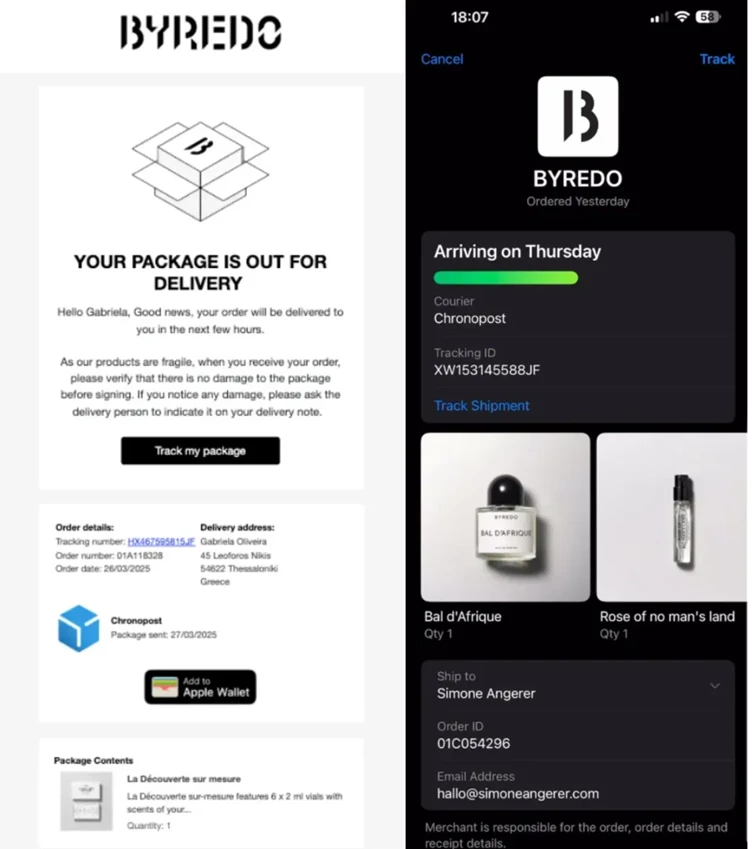
Summary: Post-purchase open rates by channel
One of the main benefits of implementing an omnichannel customer experience throughout the post-purchase period is that it increases the NPS (Net Promoter Score) of e-commerce brands.
By ensuring a consistent post-purchase experience with customers notified via their preferred channels, online brands that adopt an omnichannel experience for e-commerce delivery increase customer satisfaction: they feel reassured about their delivery and do not need to go through the hassle of calling customer support.
In 2026, the average NPS for e-commerce is between 45 and 61. However, the NPS of online retailers that leverage post-purchase notifications is almost twice as high, at 79%.
Example: Increased NPS thanks to the omnichannel post-purchase experience
Photobox, an online retailer specialising in photo printing, saw its NPS increase by 15 points just one month after adopting an omnichannel experience thanks to its post-purchase notifications, rising from 45 to 60.
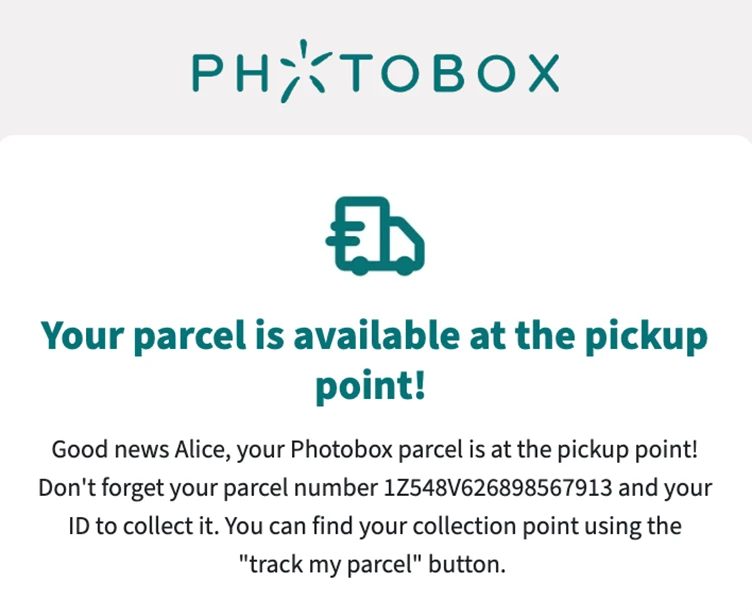
Photobox sends proactive notifications via email after purchase
Post-purchase communication plays a crucial role in the repurchase process, in two ways:
When customers receive consistent and timely updates about shipping, delivery, and issue resolution through their preferred channels, they perceive the brand as trustworthy and customer-centric. This creates a positive emotional connection that directly impacts their likelihood of repeat business.
An omnichannel approach ensures that communication is not only consistent but also personalised. If a customer receives a thank-you email, a WhatsApp notification when their order is shipped, and a message inviting them to review their purchase once it has been delivered – all messages harmonised in tone and timing – they are more likely to feel valued and satisfied. These touchpoints can be used strategically to introduce complementary products or exclusive offers.
Furthermore, post-purchase communication allows you to gather feedback and measure satisfaction. If a customer gives a high rating, it's the perfect time to offer them a referral program or exclusive access to a new collection. If the rating is lower, personalised support can be implemented immediately on the same channel, thus transforming potential churn into loyalty.
Ultimately, an omnichannel post-purchase experience does more than reduce WISMO tickets; as we will see later, it creates a meaningful relationship with the customer that boosts both loyalty and revenue.
Example: Buyback rate based on post-purchase reviews
Online retailers who have implemented an omnichannel experience through post-purchase notifications are seeing incredibly high repurchase rates.
Here are some examples of repurchase rates for online retailers who adopted post-purchase tools like ZigZag during 2026:
Example: Upselling based on post-purchase notifications
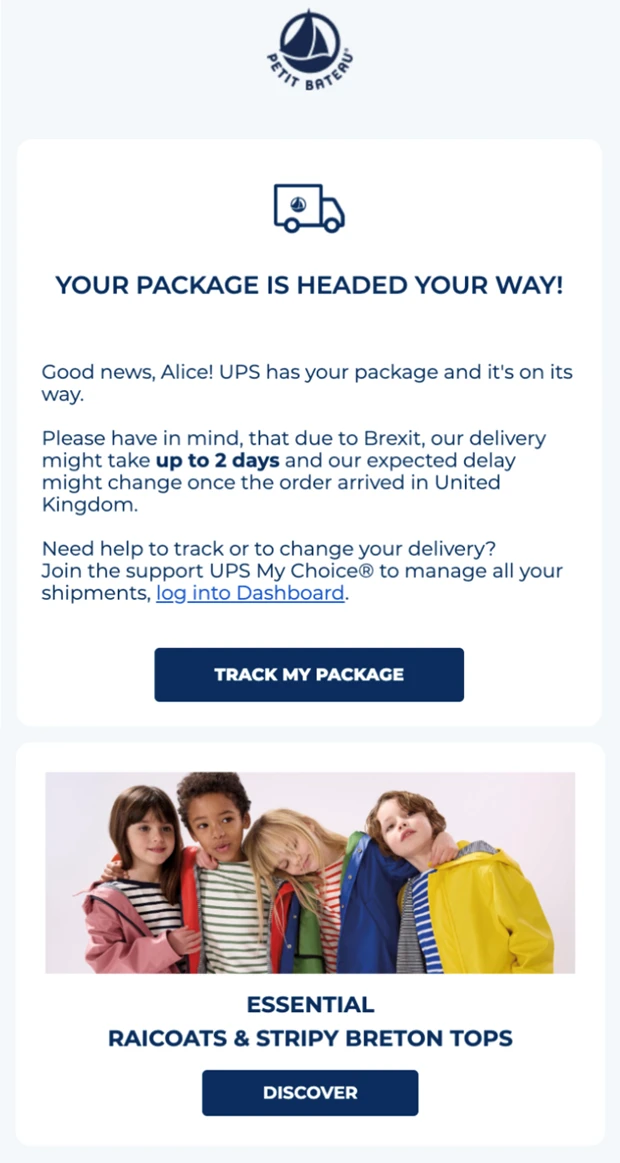
Petit Bateau, the iconic children's clothing brand, highlights its must-have collection in its post-purchase emails – from order shipment emails to delivery emails. Prestige Cosmetics and Simone Pérèle, the renowned French online lingerie retailer, use post-purchase emails to promote their loyalty programs.
One of the most common types of customer support requests in e-commerce is the infamous WISMO (Where Is My Order?) contact. In fact, WISMO is the leading customer support issue, accounting for an average of 18% of incoming requests. These repetitive requests not only overwhelm customer service teams but also reveal a lack of communication during a critical phase of the customer journey: the post-purchase experience.
This is why proactive delivery updates are becoming an essential part of any modern omnichannel strategy. Rather than waiting for customers to ask about the status of their order, major retailers are now alerting them when something unexpected happens, such as a delivery delay, a redirected package, or an order ready for pickup. It's at these times that customers feel anxious or uncertain, and proactive, timely communication can transform potential frustration into a positive interaction with the brand.
By sending these valuable updates through channels such as SMS, WhatsApp, email, or Apple Wallet Order Tracking, brands keep customers informed at the right time, reducing the need to contact them for answers. Retailers implementing this type of targeted, proactive communication often see a 30% to 50% reduction in WISMO-related contacts, allowing support teams to focus on more strategic or complex tasks.
Example: Reduced WISMO requests thanks to an omnichannel post-purchase experience
Vroomly Pro, an online retailer specialising in automotive parts, reduced its support tickets by 40% in just one month after implementing proactive post-purchase notifications. Examples of proactive post-purchase notifications:
Up to 30% of online orders are returned, a huge proportion of which are not due to dissatisfaction with the product, but to poor communication regarding delivery. These returns are detrimental to businesses: 68% of consumers would not buy again after a negative return experience.
This is where SMS communication plays a surprisingly powerful role. As part of an omnichannel strategy, SMS offers immediacy and visibility that email alone cannot match. Customers are far more likely to read a text message in real time – SMS open rates average 98%, and the majority of messages are read within three minutes of receipt. This speed is crucial for time-sensitive delivery updates.
By proactively alerting customers via SMS about delivery attempts, delays, or parcel availability at a pickup point, retailers significantly reduce the risk of delivery failures. Fewer missed deliveries mean fewer orders remaining unclaimed at pickup points for extended periods, fewer returns due to unclaimed parcels, and ultimately, a smoother customer experience.
ZigZag’s data shows this:
Examples: how to reduce return rates through post-purchase SMS notifications
As customer acquisition costs continue to rise, the smartest e-commerce brands are focusing on long-term profitability: the post-purchase experience. By offering seamless, personalised, and initiative-taking communication across channels such as email, SMS, WhatsApp, and Apple Wallet order tracking, brands are not only increasing satisfaction and reducing WISMO (Wanted Customer Experience Moment), but they are also driving repeat purchases, upselling, and loyalty. The data is clear: an omnichannel post-purchase strategy leads to higher open rates, increased NPS (Net Promoter Score), lower return rates, and fewer customer support tickets. In today's competitive e-commerce landscape, mastering the post-purchase moment is not just an advantage – it is a growth driver.