Discover 7 Zendesk automations to reduce post-purchase tickets, improve support productivity, and offer a better customer experience.
E-commerce customer support faces a paradox: consumers expect increasingly fast and personalised responses, while teams must handle growing volumes of requests with limited resources.
In this context, automating customer support is no longer just a productivity lever. It has become a way to reduce operational costs, improve customer satisfaction, and allow agents to focus on situations that truly require human intervention.
Post-purchase issues now account for a major portion of support tickets in e-commerce. At ba&sh, for example, post-purchase tickets related to delivery and returns represent 42% of support requests. Delivery tracking, returns, refunds, carrier incidents, or address errors generate thousands of repetitive inquiries every day.
With Zendesk as a central platform, it's possible to automate a large portion of these interactions.
Post-purchase experience directly influences customer loyalty and repeat purchases.
A few figures illustrate its impact:
When the same type of request is repeated hundreds or thousands of times a month, automation quickly becomes cost-effective.
The goal is not to replace agents, but to free them from repetitive, low-value tasks.
Not all these automations have the same level of complexity or impact. Some can be deployed in a few days and produce immediate results.
The first step in a customer service automation strategy involves qualifying requests as soon as they are received. Zendesk can analyse several elements to automatically classify each ticket:
Each request can then be assigned to a specific category: delivery tracking, product return, refund, address change, or carrier complaint.
By connecting Zendesk to post-purchase data, brands can go further: a request related to a delayed package, a failed delivery, or a lack of tracking can be immediately identified as a “Where Is My Order?” (WISMO) request or a carrier incident. This automatic qualification reduces manual sorting, speeds up handling, and improves visibility into contact reasons.

Once the ticket is qualified, it can be automatically forwarded to the right agent, the right team, or the right market. This routing can be based on simple criteria:
For example, French requests can be sent to the France team, German tickets to German-speaking agents, and refund requests to the relevant department.
This customer support automation becomes more effective when it relies on order context. A lost package, a failed delivery, or a high-value order can be automatically prioritised and assigned to experienced agents. Routing then no longer just saves time; it also improves processing quality and first-contact resolution rates.
One of the main obstacles to support productivity is the proliferation of tools. Agents often have to consult the OMS, carrier, CRM, or e-commerce platform to answer a single request.
Integrating post-purchase data directly into Zendesk avoids these back-and-forth exchanges. The agent can immediately view:
With ZigZag's Zendesk integration, support teams can directly access tracking information from their ticketing interface. This centralisation reduces search time, limits errors, and gives agents the necessary context to respond faster and more accurately.
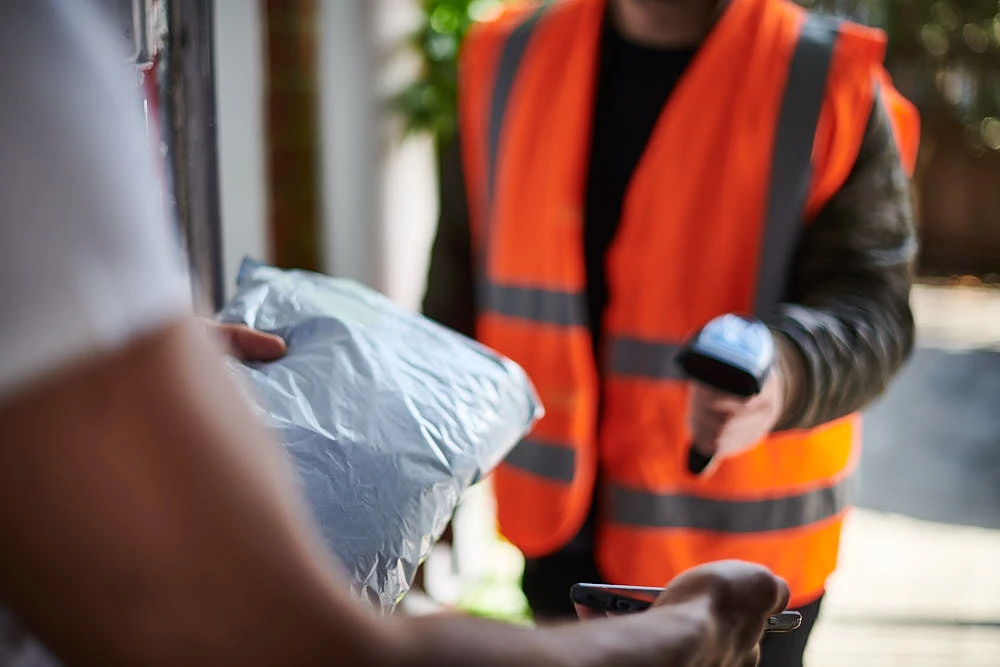
Automation isn't just about responding to customers. It can also anticipate problems. When a package appears stuck, lost, or without movement for several days, an alert can automatically trigger the creation of a ticket in Zendesk.
Triggering events can include:
This proactive approach is a key driver for automating post-purchase customer service. With enriched tracking data, teams can detect certain at-risk situations even before the customer contacts the brand.
Features like ZigZag's Smart States allow for identifying certain delivery incidents and automatically alerting teams or the customer. This type of automation naturally integrates with multichannel delivery notifications, to reduce "Where Is My Order?" (WISMO) tickets while improving customer-side transparency.
Artificial intelligence now makes it possible to handle a large portion of recurring requests. Based on the context available in Zendesk, an AI assistant can:
The agent retains final control but saves several minutes on each interaction.
The quality of AI directly depends on the quality of available data. When it has access to delivery status, carrier events, detected incidents, and multichannel delivery notifications already sent, it can offer much more precise and personalised responses.
In a customer service automation strategy, AI doesn't replace the agent: it prevents them from manually reconstructing the context and allows them to validate a reliable response more quickly.

Returns are a significant source of customer contact in e-commerce. Effective automation allows simple requests to be processed without manual intervention:
Customers immediately get the information they need, while support teams can focus on exceptional cases.
This customer service automation reduces repetitive exchanges regarding return procedures. Zendesk maintains a clear overview of the case, while agents can focus on carrier disputes, complex refunds, order errors, or sensitive situations.
A significant portion of tickets stems from a lack of information. When a customer is informed at the right time, they contact support less often.
Automations can trigger a communication during:
This is one of the most direct levers for reducing ticket volume. Brands can send personalised notifications across multiple channels based on customer preferences: email, SMS, WhatsApp, or Apple Wallet.
Thanks to ZigZag's Smart States and multi-channel notifications, brands can proactively inform customers about delays, blockages, or detected incidents. Customer service automation thus shifts from a reactive to a proactive approach: the customer receives information before they even need to ask for it.
The fashion brand ba&sh perfectly illustrates the value of an integrated approach to post-purchase customer support.
With over 22,000 orders per month, 10,000 support emails monthly, and more than 300,000 parcels processed annually, the operational stakes are significant. In Europe, 42% of customer inquiries directly concern order tracking, returns, or refunds.
To optimise its customer experience, the company relies on several complementary solutions:
The goal was not simply to respond faster to requests, but also to reduce ticket volume by anticipating the most frequent questions through better information flow.
This strategy enabled ba&sh to significantly improve the efficiency of its post-purchase support. The teams achieved a 20% productivity gain, while saving an average of 2 minutes per ticket processed. Result: 61% of requests are now processed in less than 24 hours.
"Since integrating ZigZag with all our partners, we have increased the productivity of our agents by 20% and reduced the processing time of each post-purchase ticket by 2 minutes."
Fanny Tardif, Head of Customer Care at ba&sh
Beyond operational gains, this project illustrates a significant evolution in customer support strategies. The most successful brands no longer just aim to optimise the handling of existing tickets: they primarily seek to prevent these tickets from being created by providing customers with the right information at the right time.
To go further, you can access the webinar replay and discover in detail how ba&sh, Zendesk, ZigZag, Klark, and Synolia together built a more automated and proactive approach to post-purchase support.
The most mature companies generally combine three key strategies:
Automation then becomes a service quality accelerator rather than just a cost-reduction tool.
Automating customer support is not about replacing support teams.
The goal is to eliminate repetitive tasks, provide the right context at the right time, and intervene before issues escalate into tickets.
With Zendesk as their central platform, brands can implement simple yet high-impact automations:
In an environment where customer experience is becoming a major differentiator, these automations are now a direct driver of operational performance and customer loyalty.