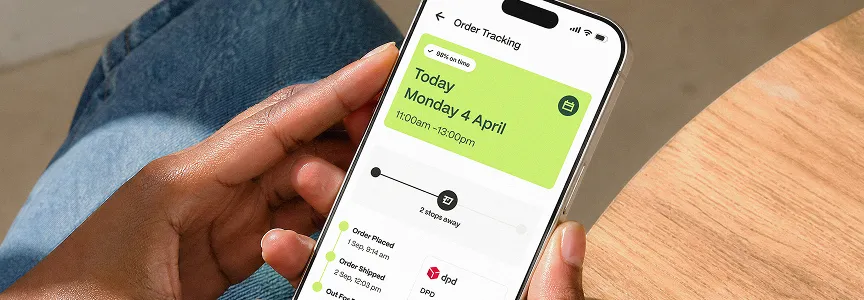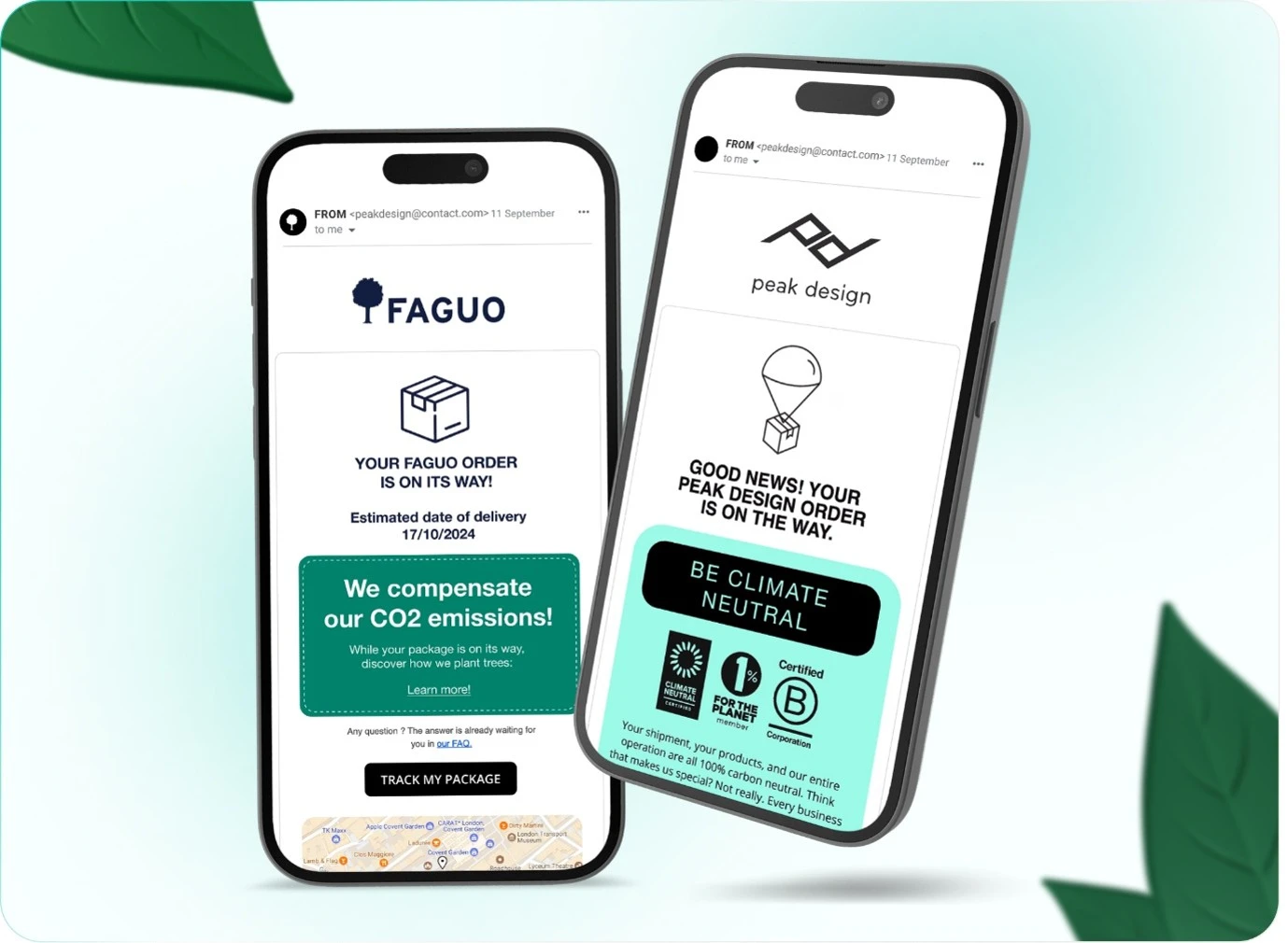
Once the order has been placed, all of the customer’s attention shifts to delivery tracking. They check their emails to see where their parcel is and feel reassured. Too often reduced to simple transactional messages, these emails can become a powerful marketing lever: boosting engagement, strengthening trust, generating additional sales… all while remaining 100% GDPR compliant.
The customer journey does not end at checkout. The relationship between you and your customer extends all the way until the package is received, and even beyond when returns come into play. However, most brands still focus a large part of their resources on the pre-sales phase: acquisition campaigns, tunnel optimisation, retargeting, conversion optimisation, etc.
Post-purchase, on the other hand, is often perceived as a simple logistical phase that brands pass off to carriers. Spoiler alert: it's a strategic mistake! Delivery and returns can represent up to 70% of the post-purchase interaction time with your customer – and it’s exactly during this period that they’re most engaged.
In fact, notifications related to delivery tracking (shipping confirmation, incident alerts, etc.) achieve average open rates above 70%, based on more than 150 million emails sent with ZigZag in 2025. That is more than double the performance of traditional marketing emails. The shipment confirmation email alone reaches an average open rate of 77% (calculated on 35 million emails sent via ZigZag). This makes delivery notifications a very high-affinity channel, capable of generating both trust and revenue, provided it is used properly.
However, in most cases:
The result: frustrated customers, missed conversion opportunities, and customer support teams overwhelmed with tickets. ZigZag internal data (via customer use cases) shows that a retailer who takes back control of their post-purchase communications can reduce your “Where Is My Order?” (WISMO) tickets by up to 40% and considerably improve their NPS: our client Nude Project achieved an NPS of 82 NPS after setting up ZigZag: that's over 30 points above the e-commerce average.
Post-purchase emails are no longer just shipping receipts. They have become a marketing channel in their own right, with unique engagement potential across all channels.
Unlike promotional emails, post-purchase emails related to delivery tracking benefit from a unique status: they are expected. Customers actively monitor the status of their order – they open, click and read carefully. Among ZigZag clients, post-purchase notifications record on average:
It is a moment of high engagement that can reassure customers, create a consistent brand experience and, in many cases, even trigger additional sales.
*Average calculated on 150 million emails sent in 2026 by ZigZag.
Where carriers send generic, impersonal updates, ZigZag gives brands back full control over their post-purchase communication. With the integrated template editor and the “Marketing Campaign” feature, marketing teams can:
Customers receive clear, consistent messages that truly reflect the brand. A simple “Your order is arriving tomorrow” email becomes a seamless extension of the shopping experience, reassuring customers and building trust.
Thanks to the “Marketing Campaign” feature, this consistency is maintained over time: content updates automatically based on the planned calendar, with no manual intervention. Teams gain agility during key moments (sales, holidays, product launches, etc.) while maintaining full control over their brand image.
For premium brands, the benefit is twofold: a smooth, high-end customer experience and a significant time savings in managing all post-purchase communications.

One of the main obstacles to leveraging post-purchase emails for marketing is the fear of breaching the legal framework. GDPR strictly regulates the use of personal data and prohibits unsolicited commercial communications.
However, post-purchase emails have a special status: they are considered transactional. This means they can include all the information necessary for the proper execution of the order (shipping, tracking, delivery, satisfaction, etc.) without requiring the customer’s prior consent.
On the other hand, as soon as a message includes a promotional component (cross-sell, loyalty program, repurchase coupon, etc.), it becomes essential to maintain a certain balance: the main content must remain informative and focused on delivery, while the marketing part must remain in the background.
By maintaining this balance between transparency and monetisation, brands can turn their post-purchase emails into powerful engagement levers without compromising customer trust.
Remember: the post-purchase experience isn't limited to emails. Customers expect to receive the same information, in the same tone, across every channel: email, SMS, WhatsApp, Apple Wallet. The challenge for brands is to maintain a coherent message and design through this omnichannel approach.
ZigZag addresses this need through its multi-channel notifications: messages sent by email, SMS or WhatsApp are perfectly synchronised, ensuring the same level of clarity and the same visual identity regardless of the channel. A customer checking their notification on WhatsApp will find exactly the same promise and information as in their email.
During peak periods (Black Friday, Christmas, sales, etc.), manually updating each email template to insert a promotion quickly becomes unmanageable. Marketing teams waste time and increase the risk of errors (untranslated banners, expired offers, inconsistent messages, etc.).
To solve this, ZigZag has developed a unique feature: marketing campaign scheduling.
It’s an intelligent automation system that lets you plan the display of marketing content directly inside your post-purchase emails.
With this feature, brands can:
In practice, this means that a shipping confirmation email can automatically display a “Free delivery this weekend” banner and then, as early as Monday, revert to a more brand-oriented message, with no human intervention.
For brands using this feature via ZigZag, four types of campaigns consistently deliver outstanding click-through rates:
ℹ️ These insights are based on 1.8 million notifications sent by brands using ZigZag’s marketing campaign scheduling feature.
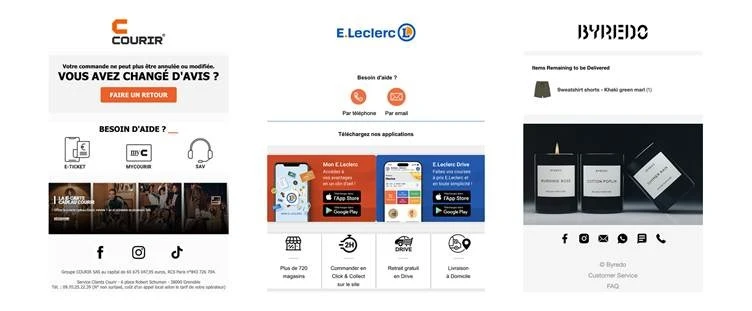
Some examples with Courir, Leclerc and Byredo
For many brands, post-purchase communication is still the last “blind spot” in the customer experience. ZigZag’s email editor changes that. Brands can fully customise their templates:
Teams can also preview the output by language, scenario, and device type.
This is how pet food brand Ultra Premium Direct was able to restore consistency across its customer journey by aligning post-purchase emails with its e-commerce brand guidelines. Result: +12% average click rate on notifications and a significant reduction in support requests.
With ZigZag’s marketing campaign feature, post-purchase communication becomes a living marketing channel. CRM teams can turn each step of the journey into a real campaign moment:
Every status update becomes a contextual touchpoint that drives engagement and revenue. And thanks to the built-in scheduling system, there’s no need to touch the banners manually: content, dates, and messages are updated automatically with full traceability for the marketing and CRM teams.
The marketing impact of your ZigZag notifications is fully measurable and trackable in your existing analytics stack. With the ZigZag dashboard and UTM tracking, e-retailers can:
UTMs are automatically applied to all ZigZag links (emails, banners, tracking pages). Results flow directly into your usual tools (Google Analytics, Mixpanel, Amplitude, etc.) without extra action required.
This level of visibility allows you to prove the ROI of post-purchase communications, identify the most effective levers and to adjust your campaigns in real time and continuously fine-tune your campaigns in real time, directly from your analytics environment.
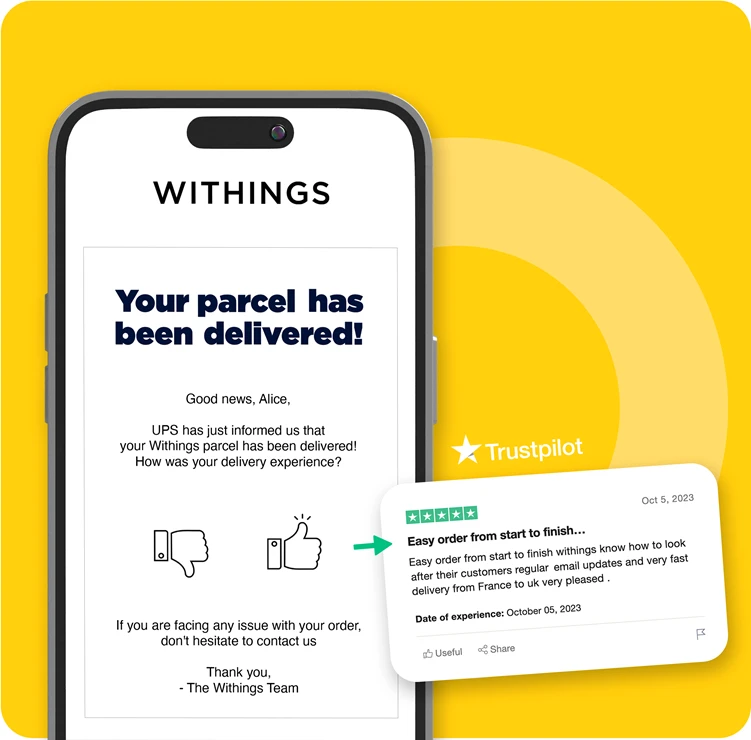
With a high volume of international shipments, HealthTech leader Withings was facing a surge in “Where Is My Order?” (WISMO) tickets. The team chose ZigZag for automate notifications and standardise customer communication.
Results:
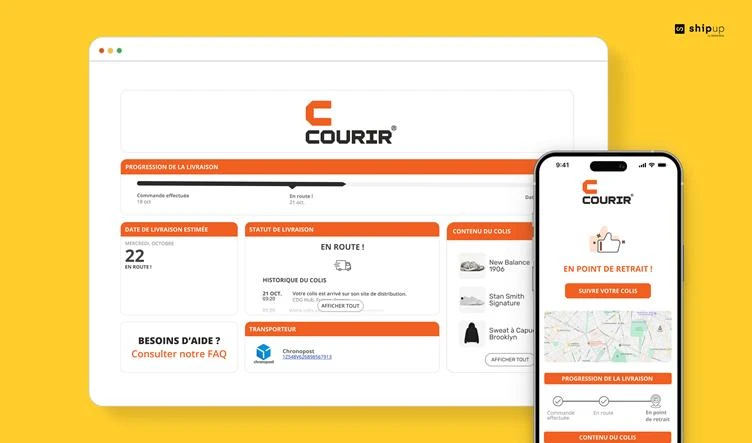
With a strong, distinctive identity, sneakers brand Courir wanted to extend its brand experience beyond the purchase. By relying on ZigZag, the brand has transformed every notification and every delivery milestone into a branded, consistent and engaging touchpoint – from the website to the tracking page and multi-channel delivery updates.
Result: +4 visits per order on the personalised tracking page, stronger customer engagement throughout the post-purchase journey, and a premium experience that reinforces the brand’s attractiveness.
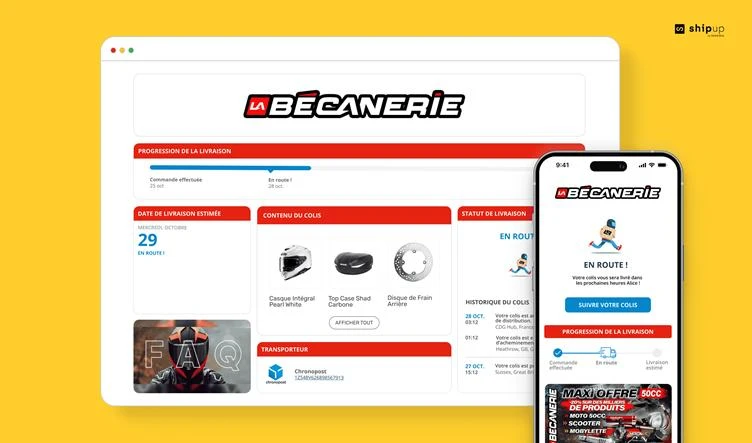
With a demanding and passionate community, mortocycle accessory e-tailer La Bécanerie wanted order tracking that lived up to its expertise and customer promise. With ZigZag, the team unified the entire post-purchase journey: an immersive tracking page, proactive notifications and reliable information at every stage to reassure, engage and highlight each shipment.
The result: a clear, consistent delivery experience, a sharp drop in “Where Is My Order (WISMO?” requests, and a distinctive customer journey that strengthens trust and loyalty within their community.
Logistical information remains a priority. It should appear clearly: status of the package, tracking link, delivery estimate. The marketing part should never take over to remain compliant with the requirements of the GDPR.
Each notification can include dynamic variables: first name, product ordered, language, country, delivery date, type of carrier. A contextual approach reinforces relevance and proximity.
Marketing inserts must adapt to the moment of the journey: a welcome message after the first order, an incentive for feedback after delivery, an offer targeted to the category of purchase.
A post-purchase email should extend the visual universe of the e-commerce site. Font, colours, tone: everything should evoke the brand. ZigZag templates facilitate this consistency across all scenarios and channels.
No campaign should remain static. The most successful brands test their templates, adjust the position of the banners, compare their click rates and optimise their content every quarter.
Post-purchase email is now a pillar of the customer experience. It’s no longer just about informing, but about communicating with purpose: reassuring, thanking, re-engaging.
Brands that embrace this vision turn delivery into a moment of positive emotion and follow-up into proof of genuine consideration. The future of e-commerce doesn’t depend solely on the conversion funnel, but on the quality of post-purchase follow-up. Market-leading brands know this: mastering the delivery phase means extending the brand promise right to the end of the journey.
Because in the end, a great post-purchase email isn’t the one that simply says a package is on its way. It’s the one that reminds the customer why they were right to choose this brand.