CRM teams are increasingly looking to enrich their campaigns with signals coming from the actual customer journey. Yet post-purchase data remains largely underused, even though it directly impacts customer satisfaction, retention, and repeat purchases.
The paradox is straightforward: CRM strategies are highly optimised for acquisition and conversion, while the post-purchase phase – especially delivery – is still often treated as a purely operational layer, despite being one of the moments when customer attention is at its highest.
In this context, ZigZag and Splio address two complementary parts of the customer journey: CRM activation on one side, and the post-purchase experience on the other.
Splio enables brands to centralise customer data and orchestrate personalised CRM campaigns across every channel: email, SMS, push notifications, and loyalty programs. The platform acts as an activation and segmentation engine, connecting customer behaviors to marketing scenarios.
ZigZag powers the entire post-purchase layer: delivery tracking, returns, proactive notifications, and feedback collection. This makes a stage of the customer journey that is often missing from CRM strategies both visible and actionable.
The complementarity is clear: Splio focuses on the customer relationship, while ZigZag focuses on the customer’s actual experience. Together, they help reconnect the brand promise with the reality of the customer journey.
In many organisations, the post-purchase phase remains a blind spot in CRM strategy. Delivery data is often already available within the CRM through existing integrations, but it is rarely leveraged in marketing workflows. As a result, brands miss out on high-value logistics signals that are difficult to access natively, and post-purchase communications remain largely standardised.
This creates several limitations:
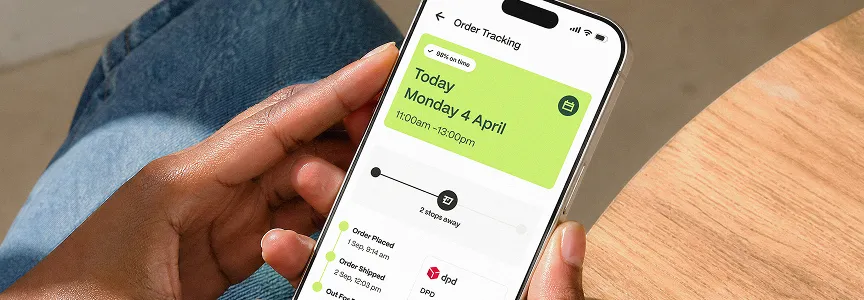
Yet tracking pages and delivery notifications are among the most frequently viewed touchpoints after a purchase. They capture a high level of customer attention, but are still rarely used as CRM engagement channels.
One of the key benefits of the Splio x ZigZag combination is the ability to bring CRM directly into the delivery experience.
The loyalty program can be embedded directly into the tracking page through dynamic content blocks. This transforms what has historically been a logistics interface into a true CRM touchpoint.
This makes it possible to:
In most cases, this type of use case can be deployed without heavy technical integration, making it a fast and practical lever to activate.
Another complementary opportunity lies in mobile wallets.
Splio enables brands to centralise loyalty assets such as membership cards, benefits, and customer status within mobile wallets.
ZigZag complements this by adding delivery tracking notifications directly into Apple Wallet.
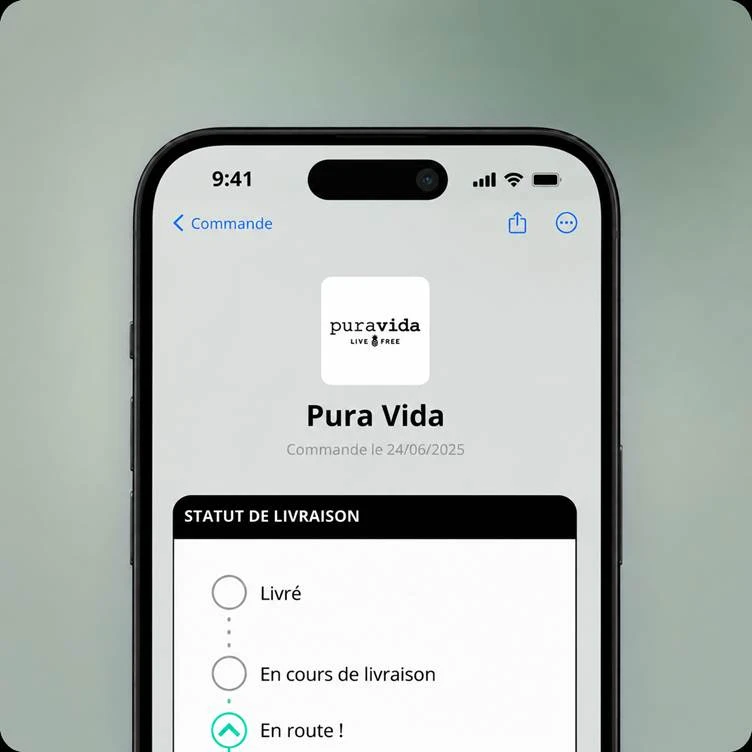
Together, they create a native mobile channel, free for both the brand and the customer, where post-purchase information is seamlessly accessible. Wallet notifications benefit from high visibility because they appear directly within the customer’s mobile environment, without relying on an email being opened or an app being launched.
Combined, they make it possible to bring together in a single environment:
The wallet therefore becomes a continuous relationship channel, embedded directly into the customer’s everyday mobile experience.
The complementarity between Splio and ZigZag highlights a major shift in CRM strategies: reconnecting marketing activation with the customer’s real experience.
The post-purchase phase is no longer just a logistics step. It is a high-attention moment, rich in signals, that can be leveraged to strengthen the customer relationship.
By connecting CRM and post-purchase experiences, brands can better drive:
The challenge is no longer simply about orchestrating campaigns, but about anchoring them in the moments that truly matter in the customer relationship.