
Customer communication is undergoing a major transformation. Conversational commerce is one of the most powerful trends shaping this change. To increase customer engagement and loyalty, online retailers are adopting a more familiar and personal approach to communication via mobile channels such as WhatsApp. While traditionally focused on product discovery and customer support, conversational commerce is revolutionising a crucial but often overlooked stage: the post-purchase experience.
Coined by Chris Messina (inventor of the hashtag) in 2015, conversational commerce refers to the use of messaging platforms, chatbots, and voice assistants to facilitate commerce. Instead of navigating complex websites or applications, consumers can engage with brands through natural, real-time conversations via channels such as WhatsApp, Facebook Messenger, SMS, or live chat.
This trend has developed rapidly, fueled by consumer demand for convenience, personalisation, and immediacy. It is already changing how shoppers request recommendations, place orders, and get help. But the post-purchase phase – particularly delivery – is now catching up.
Conversational commerce plays a vital role in enhancing the post-purchase experience by transforming traditional delivery updates into interactive and personalised touchpoints. Instead of one-way notifications, channels like WhatsApp, Apple Wallet Order Tracking, SMS, and chatbots enable real-time, two-way communication, allowing customers to track their orders, ask questions, reschedule deliveries, and provide feedback seamlessly.

Conversational commerce significantly improves the post-purchase experience by allowing brands to engage customers with:
Improve transparency and reassure with personalised real-time updates via messaging apps like WhatsApp, which boast an astounding 98% open rate.
Order tracking notifications via Apple Wallet saw a 380% increase in visits to the tracking page. This allowed customers to reschedule deliveries, ask questions, or initiate returns instantly, contributing to a 10-20% increase in CSAT or NPS scores.
Increase repeat purchase rates by up to 22% by sending proactive and contextual notifications such as "Your order is delayed" or "Your order is at the pickup point".
Boost post-purchase engagement through automation and human fallback, ensuring efficient and empathetic support that drives customer satisfaction.
Delivery is often a source of stress for online shoppers. Where is my package? When will it arrive? With conversational commerce, brands can proactively message customers with delivery information, reducing "Where is my order?" (WISMO) inquiries. Instead of asking customers to check tracking pages, updates can be sent directly via chat – with links to the brand's tracking pages offering real-time delivery estimates.
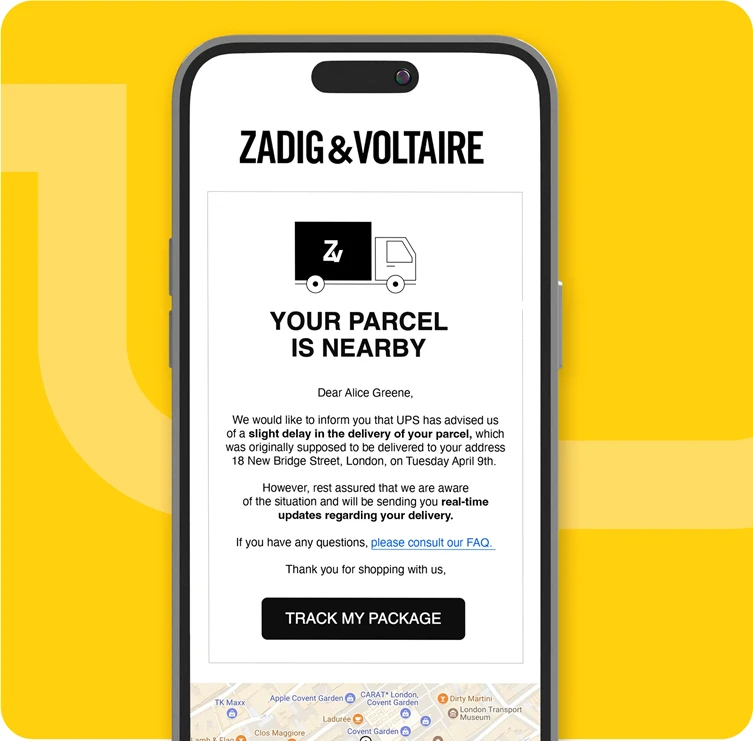
Practical tips and examples:
Triggering automated messages at key moments in the delivery process:
→ "Your order has been shipped 🚚"
→ "Awaiting delivery 📦"
→ "Delivered ✔️"
Missed deliveries, address errors, or package delays often frustrate customers. Conversational channels allow businesses to enable users to respond in real time. Whether it's rescheduling a delivery or changing the route to a pickup point, the experience becomes much smoother when handled via chat, rather than phone or email.
Practical tips and examples
On WhatsApp or Messenger, offer quick reply buttons such as:
→ "Track order" | "Change delivery time" | "Contact support"
Chatbots can instantly answer common questions, such as estimated delivery dates or returns, while human agents can handle more complex situations. This hybrid approach allows for scalable and empathetic customer service.
Practical tips and examples:

The delivery moment is also a golden opportunity to continue engagement. Brands can request feedback, encourage repeat orders, or recommend complementary products through conversational feeds.
Practical advice and examples by distribution channel:
WhatsApp is a native two-way mobile channel designed for real-time interactions. With rich features like quick replies, buttons, and brand feeds, it's perfect for delivery updates, support, or feedback. WhatsApp boasts a 98% open rate, and its conversational format makes it one of the most powerful tools for post-purchase engagement.
Order tracking via Apple Wallet allows your brand to be visible through a pass installed on the customer's phone. It enables real-time push updates and tap-to-act buttons like "Track Package" or "Contact Support." While not a chat tool, it creates a seamless, interactive experience that feels personal and frictionless.
SMS provides quick and clear updates with near-instant open rates. It's perfect for urgent delivery messages and basic two-way interactions like rescheduling. While not media-rich, it's highly effective at triggering immediate action.
Email becomes conversational when it is automated, personalised, and action oriented. With dynamic content inviting customers to interact with brands on their social media or to provide feedback on deliveries via brand surveys, short, interactive emails can mimic chat-like experiences.

Online chat and in-app messaging offer real-time, two-way communication during delivery. From answering the question "Where is my order?" to proactive updates and live agent intervention, they provide a complete conversational experience integrated into your digital ecosystem.
Today, consumers don't just buy products; they buy experiences. A transparent and communicative delivery process builds trust, reduces churn, and increases brand loyalty. In a world where logistical challenges are often unavoidable, how you communicate is just as important as what you deliver.
Conversational commerce makes the delivery experience human, fast and personalised, and turns it not into a final step, but a moment of pleasure.
Use the channels your customers already use, rather than forcing them to use platforms they are unfamiliar with.
Practical tips and examples:
Automation provides scale, humans provide trust. Finding the right balance.
Practical tips and examples:
The delivery moment is an important window for engagement – use it to extend the relationship.
Practical tips and examples:

Track open rates, click-through rates (CTR), and response rates across all channels. For example, WhatsApp and SMS open rates are often above 90%, while Apple Wallet order follow-up messages can trigger real-time re-engagement. These metrics indicate whether your messages are being seen and interacted with.
Use Net Promoter Score (NPS), Customer Satisfaction (CSAT), and post-delivery feedback response rates to measure the impact of communication on perception. A personalised and proactive experience tends to increase satisfaction and brand trust.
Monitor WISMO (Where Is My Order) ticket volume, first-contact resolution, and channel diversion rates. Efficient conversational flows reduce support workload by answering questions before they're even asked.
Evaluate repeat purchase rates, time to next purchase, and conversion rates for post-delivery offers (e.g., upsells via Apple Wallet or WhatsApp order tracking). A smooth, brand-driven post-purchase journey often increases customer loyalty and lifetime value.
As expectations for speed, transparency, and convenience increase, conversational commerce is no longer just an advantage; it's becoming a competitive necessity. For e-commerce brands, the delivery experience is no longer a black box; it's a stage for connecting, converting, and building customer loyalty.
Investing in conversational delivery tools isn't just about reducing WISMO tickets. It's about building trust, delighting your customers, and standing out in a crowded market.